
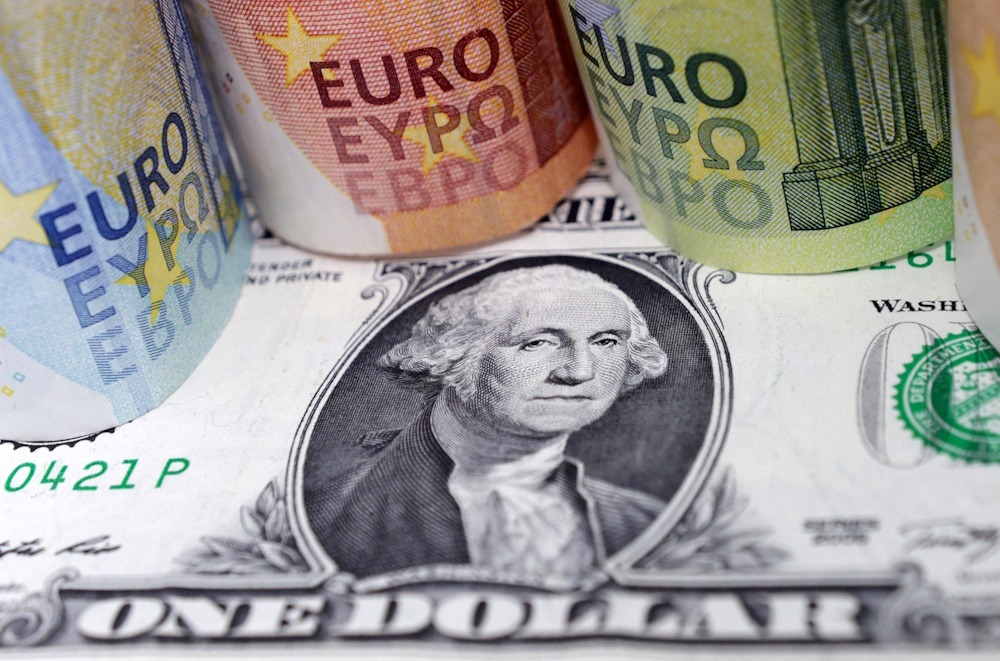
The Euro experienced a brief recovery on Friday against the Greenback, which had a fleeting rally lasting only two days, but ultimately lost Thursday’s gains on Friday, as illustrated by the US Dollar Index. A risk-on sentiment diminished the Dollar’s safe-haven allure, as an unremarkable ECB monetary policy decision on Thursday prompted traders to focus on market dynamics. The EUR/USD is currently positioned at 1.1817, reflecting an increase of 0.34%.
EUR/USD experiences a rebound as risk-on sentiment diminishes the Dollar following a brief two-day rally in the DXY. Weaker US employment figures have increased expectations for a Federal Reserve rate cut, leading markets to adjust their projections for easing as the year comes to a close. Officials from the ECB are minimizing the significance of the Euro’s strength, indicating that foreign exchange fluctuations have already been incorporated into their forecasts.
> Euro reduces losses around 1.1820 as diminishing Dollar strength and consistent ECB communication stabilize the pair: Thursday’s disappointing jobs data has sparked speculation that the Federal Reserve may lower rates more than twice this year. In Friday’s session, money markets initially priced in 62 basis points of easing, but later adjusted to 54 bps, as reported. In the latest updates, Fed speakers have made their positions clear: Raphael Bostic adopted a hawkish stance, Mary Daly maintained a neutral perspective, and Vice Chair Philip Jefferson indicated that a stable labor market mitigates inflation risks. In the European market, the agenda was sparse, but the Industrial Production data from Germany fell short of expectations for December. In the meantime, European Central Bank policymakers made headlines, reiterating points from President Lagarde’s speech, where she emphasized that they are not concerned about the volatility in the EUR/USD, especially regarding the strength of the Euro. She noted that since the summer, the Euro “it has fluctuated within a range…” and that the ECB “concluded that the impact of the exchange rate appreciation since last year is incorporated in our baseline.” Next week, the agenda will be packed on both sides of the Atlantic, primarily influenced by speeches from the ECB and the Fed. Nonetheless, the key focus will be the Nonfarm Payrolls report for January, along with Retail Sales and the Consumer Price Index, both in the United States.
Latest FX Rate Trends: Euro disregards comments from Fed officials, experiences an increase
- Atlanta’s Fed Raphael Bostic emphasized the necessity of maintaining interest rates at a level that curtails economic activity and aims to bring inflation back to 2%.
- San Francisco Fed President Mary Daly emphasized the necessity for policymakers to strike a balance between the two aspects of the Fed’s dual mandate. In the meantime, the Fed’s Vice Chair Philip Jefferson expressed a “cautiously optimistic” outlook regarding the economy, noting that the current monetary policy is “well positioned” to address the challenges that may arise in the future.
- Declining job openings, a rise in layoffs as indicated by the Challenger report, and a spike in Jobless Claims have strengthened the outlook that the Federal Reserve may initiate interest rate cuts in 2026.
- The University of Michigan’s Consumer Sentiment index for February has shown an improvement, rising to 57.3 from 56.4, surpassing the anticipated figure of 55. One-year inflation expectations decreased to 3.5% from 4.0%, whereas the five-year outlook saw a slight increase to 3.4% from 3.3%.
- In December, German industrial production experienced a significant contraction, declining by 1.9% month-on-month, as reported by the federal statistics office on Friday. The decrease was significantly sharper than the 0.3% reduction projected by analysts.