
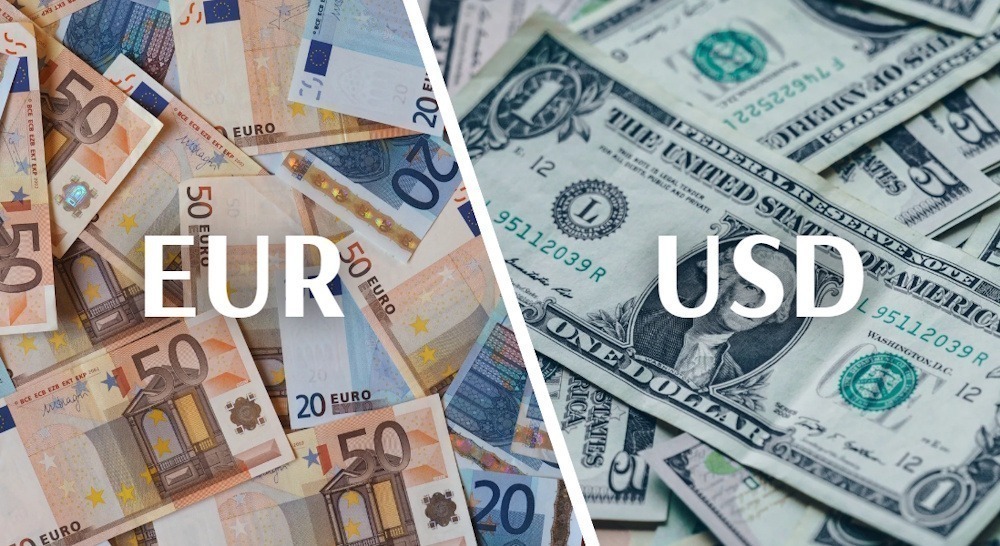
The EUR/USD pair remains steady at approximately 1.1795 in the early Asian session on Tuesday. The US Dollar shows signs of weakening against the Euro due to ongoing uncertainty surrounding US tariffs. The upcoming release of the US January Producer Price Index report is set to attract significant attention later on Friday. The ruling by the US Supreme Court on Friday invalidated numerous tariffs implemented by former President Donald Trump. However, Trump demonstrates no indication of retreating from his hallmark economic strategy. The administration announced its intention to implement a new 15% tariff starting Saturday. The trade chief of the European Parliament announced that the European Union intends to halt the ratification process of the trade agreement with the US until it obtains information from Trump regarding his trade policy. Recent ambiguity in US trade agreements is putting downward pressure on the Greenback, while simultaneously providing support for the major pair. On Monday, President Christine Lagarde of the European Central Bank emphasized the need for the central bank to remain “agile” in its approach to monetary policy, even though it is currently in a strong position. Lagarde reiterated that policymakers will determine interest rates “meeting by meeting,” and highlighted the balance of risks as “broadly balanced.”
On Friday, the US PPI data will be in the spotlight, potentially providing insights into the trajectory of US interest rates. Experts predict a slowdown in PPI inflation for January relative to December. However, if the report reveals stronger than anticipated results, this could lend some support to the Greenback in the short term. (This story was amended on February 23 at 00:50 to clarify, in the first bullet point, that EUR/USD rises to approximately 1.1795 during Tuesday’s early Asian session, rather than Monday). The Euro serves as the official currency for the 20 member countries of the Eurozone within the European Union. The currency ranks as the second most actively traded globally, following the US Dollar. In 2022, it represented 31% of total foreign exchange transactions, with an average daily turnover exceeding $2.2 trillion. The EUR/USD currency pair stands as the most actively traded in the global market, representing approximately 30% of all transactions. It is succeeded by EUR/JPY at 4%, EUR/GBP at 3%, and EUR/AUD at 2%. The European Central Bank, located in Frankfurt, Germany, serves as the reserve bank for the Eurozone. The ECB establishes interest rates and oversees monetary policy. The ECB’s main responsibility is to ensure price stability, which involves either managing inflation or promoting growth. The main instrument utilized is the adjustment of interest rates, either upwards or downwards.
Typically, elevated interest rates – or the anticipation of increased rates – tend to favor the Euro, and the opposite holds true as well. The ECB Governing Council convenes eight times annually to make decisions regarding monetary policy. Decisions are determined by the leaders of the Eurozone national banks and six permanent members, among them the President of the ECB, Christine Lagarde. The inflation data for the Eurozone, as indicated by the Harmonized Index of Consumer Prices, serves as a crucial economic indicator for the Euro. If inflation exceeds expectations, particularly surpassing the ECB’s 2% target, it necessitates an increase in interest rates by the ECB to regain control. Higher interest rates in comparison to other regions typically enhance the appeal of the Euro, as it draws global investors looking for favorable places to invest their capital. Data releases assess the economy’s condition and may influence the Euro. Metrics like GDP, Manufacturing and Services PMIs, employment figures, and consumer sentiment surveys can all impact the trajectory of the single currency. A robust economy positively impacts the Euro. It not only draws in greater foreign investment but may also prompt the ECB to raise interest rates, thereby directly bolstering the Euro.
Conversely, should the economic data be underwhelming, a decline in the Euro is anticipated. The economic indicators for the four largest economies in the euro area—Germany, France, Italy, and Spain—hold considerable importance, representing 75% of the Eurozone’s economy. Another important data release for the Euro is the Trade Balance. This metric assesses the disparity between a nation’s earnings from exports and its expenditures on imports during a specified timeframe. When a nation generates exports that are in high demand, its currency is likely to appreciate due to the increased interest from international buyers looking to acquire these products. A positive net Trade Balance enhances a currency, while a negative balance has the opposite effect.