
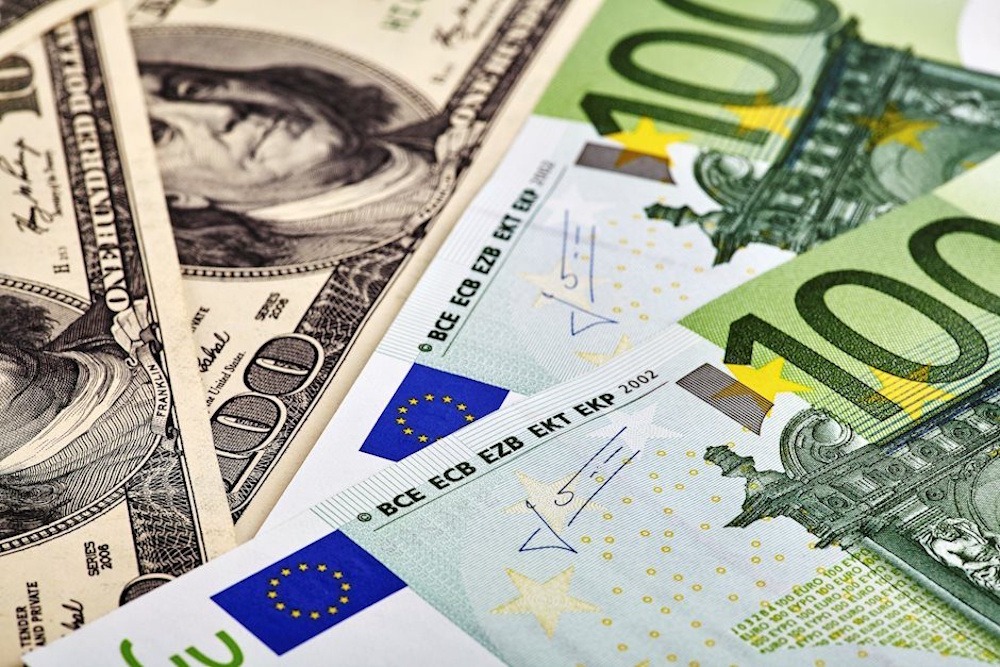
EUR/USD experiences a decline, approaching 1.1685 during the early hours of Tuesday’s Asian session. The United States has advised its citizens to leave countries across the Middle East without delay in light of escalating tensions. The ECB may consider increasing rates in response to a surge in oil prices triggered by military activities in the Middle East. The EUR/USD pair is experiencing slight declines, currently positioned at 1.1685, marking its lowest point since late January, as observed in the early Asian session on Tuesday. The US Dollar strengthens against the Euro as rising tensions in the Middle East enhance the appeal of safe-haven currencies. The initial estimate of the Harmonized Index of Consumer Prices for the Eurozone is set to be released later on Tuesday.
The United States and Israel have targeted thousands of locations within Iran, maintaining their coordinated efforts following the assassination of Supreme Leader Ayatollah Ali Khamenei. US Secretary of State Marco Rubio stated on Tuesday that the US is gearing up for a “major uptick” in attacks in Iran over the next 24 hours. In a recent statement, a commander from Iran’s Revolutionary Guard Corps declared that the Strait of Hormuz is currently closed, asserting that Iran will take action against any vessel attempting to navigate through.
An increase in geopolitical tensions in the Middle East prompts a movement towards the Greenback, presenting challenges for the major pair in the short term. Market observers anticipate that the European Central Bank will maintain its current interest rates at least until the middle of 2026. Nonetheless, a spike in oil prices has prompted certain policymakers to indicate that the central bank should be ready to adjust rates in either direction should economic uncertainty continue.