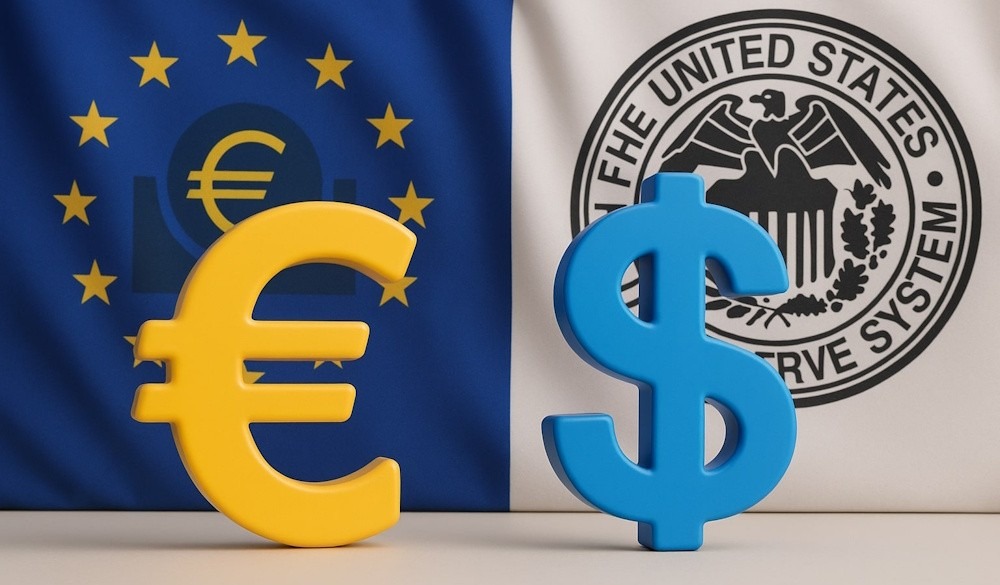
The EUR/USD pair could experience a decline as the US Dollar, often viewed as a safe haven, strengthens in response to rising tensions in the Middle East. President Trump indicated a potential resumption of military actions against Iran in the coming days to compel a resolution to the ongoing conflict. The Euro could strengthen, bolstered by assertive remarks from ECB officials. EUR/USD shows minimal movement following slight losses from the prior day, remaining around 1.1600 during the Asian trading session on Wednesday. The currency pair is likely to face additional depreciation as the US Dollar strengthens, driven by heightened risk aversion linked to the ongoing conflict in the Middle East.
US President Donald Trump has recently indicated a potential resumption of attacks on Iran within a timeframe of two to three days, aligning with efforts to negotiate a resolution to the ongoing conflict. A brief pause in planned hostilities occurred after a new proposal by Tehran aimed at resolving the US-Israeli conflict, according to source. In the meantime, an Iranian official emphasized that the United States’ threat of a significant military action would be addressed with determination, asserting that Iran is entirely ready to face any form of military aggression. On the monetary policy front, Federal Reserve Bank of Philadelphia President Anna Paulson indicated that the existing policy is somewhat restrictive, aiding in the management of inflation pressures while ensuring a stable labor market.
Paulson noted that the existing policy rate is effective in exerting downward pressure on inflation; however, a rate hike could be warranted if economic growth surpasses potential or if new inflationary risks emerge. Meanwhile, the Euro may strengthen against the US Dollar, bolstered by hawkish remarks from European Central Bank officials. Martin Kocher, a member of the ECB Governing Council, cautioned that a rate hike in June is inevitable if the Hormuz Strait stays closed, emphasizing that an extended conflict will significantly elevate inflation in the eurozone.
Bundesbank President Joachim Nagel reiterated this perspective, indicating that the ECB is diverging from its baseline scenario and suggesting that measures may be necessary in June. In light of the indications from central banks, a notable 85% of economists anticipate that the ECB will increase its deposit rate by 25 basis points to 2.25% in June. This indicates a significant rise in expectations relative to the period leading up to the April meeting, at which point slightly more than half of the surveyed economists predicted such an action.