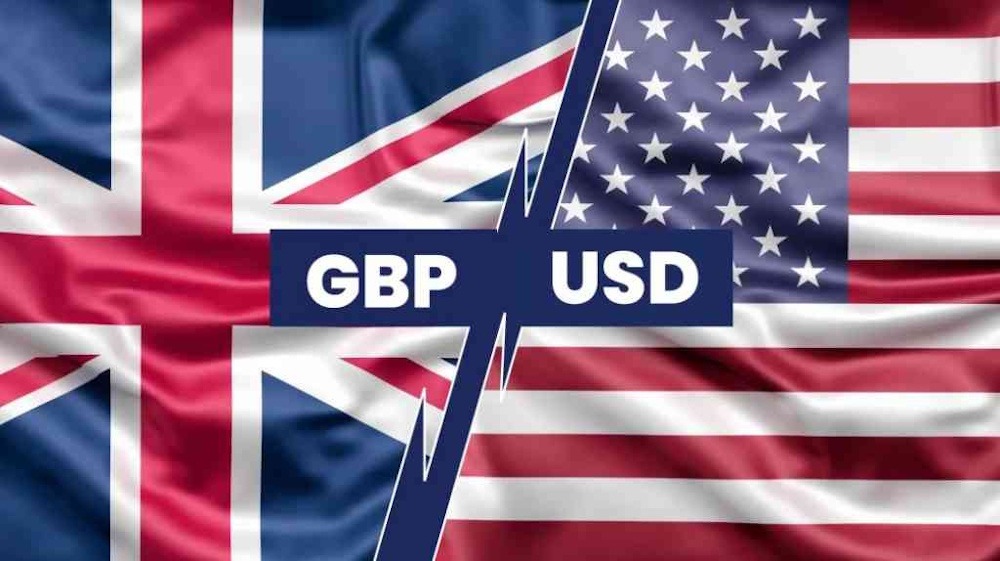
Scotiabank analysts caution that the diminishing yield spreads between the UK and US are undermining the fundamental support for the British pound. Rising oil prices have rekindled concerns regarding stagflation in the UK, presenting a complex challenge for the Bank of England. Safe-haven demand stemming from the escalating tensions in the Strait of Hormuz has bolstered the US Dollar amid increasing global market instability. The British Pound continues to exhibit weakness as the yield differential between the UK and US narrows, contributing to the strengthening of the US Dollar. Consequently, GBP/USD has extended its losses for the second consecutive day, trading around 1.3450 during the Asian hours on Friday. The pair depreciates as the British Pound softens, despite a reduction in political risk in the United Kingdom. Analysts at Scotiabank observe that “fundamentals appear to be somewhat less supportive for the GBP, as we note the renewed softening in yield spreads,” tempering the near-term backdrop for the currency.
However, they also highlight that “sentiment continues to improve” as “market participants continue to fade politically-motivated concerns following the recent political transition and arrival of PM Burnham.” In their view, “the new PM’s commitment to fiscal responsibility appears to be much stronger than expected,” helping to offset the drag from softer yield differentials and underpinning a more constructive tone toward the Pound. Rising oil prices have reignited concerns regarding persistent inflation and slow economic growth in the UK, posing a significant “stagflationary” challenge for the Bank of England. This pressure directly tests the central bank’s stance following last week’s monetary policy meeting, where Governor Andrew Bailey downplayed the necessity for further rate hikes. At that moment, Bailey conveyed assurance that the UK’s disinflation trajectory is securely aligned, despite the prevailing geopolitical uncertainties. The GBP/USD pair is experiencing downward pressure as the US Dollar gains strength, driven by a resurgence in safe-haven demand among global investors.
Escalating tensions in the Strait of Hormuz have unsettled market stability and fostered considerable scepticism about the reopening of this vital shipping route. Market caution remains elevated as Iran’s parliament evaluates a draft proposal that seeks to prohibit US and Israeli vessels, levy a 20% cargo penalty on hostile nations, and maintain restrictions on the corridor until the US blockade is removed. Fed’s Musalem delivers a slightly more hawkish tone, with a 7.4/10 FXS Speechtracker score relative to the historical average of 7/10, emphasising that inflation expectations risk losing their anchor even as they currently align with the 2% target. The emphasis on core inflation in the context of energy volatility, a tendency toward gradual rate increases, and the evaluation that core inflation is probably within the range of 2.5% to 3% highlight the apprehension that inflation could remain above the target.
Furthermore, the statement that it is occasionally permissible for the central bank to catch markets off guard indicates a readiness to prioritise its mandate over market expectations. Musalem’s perspective that the Dollar’s reserve status is secure, the labour market is robust yet not a catalyst for inflation, and that financial conditions are still highly accommodative underscores a context in which potential upward rate risks persist. The FXS Fed Sentiment Index remained stable, holding at a notably hawkish level of 138.69, suggesting that Musalem’s comments align with the existing hawkish sentiment without altering it significantly. The combination of a slightly above-baseline FXS Speechtracker score and a stable, elevated FXS Fed Sentiment Index indicates that the speech reinforces current expectations for a Fed likely to maintain a tight policy stance, thereby supporting the Dollar while constraining new directional momentum.