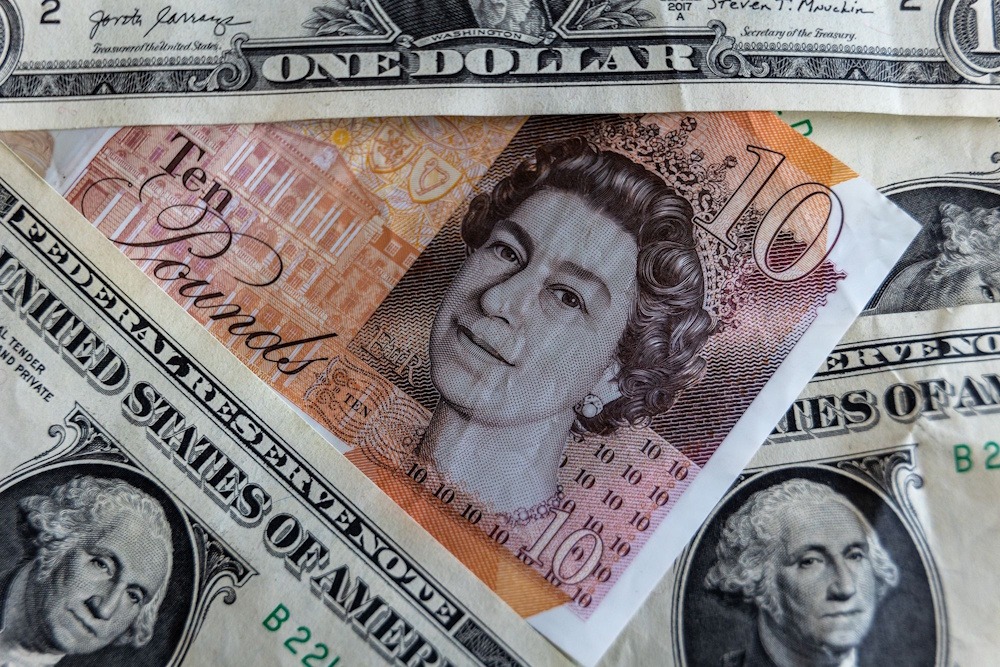
GBP/USD faces challenges due to the robust performance of the US Dollar and rising Treasury yields. Markets are currently reflecting a 78.3% probability of a Federal Reserve rate increase in December, even with a decision to maintain rates in October. Rebounding oil prices propel UK gilt yields to multi-year highs, posing a risk to economic growth. GBP/USD remains subdued for the second successive day, trading around 1.3210 during the Asian hours on Thursday. The pair inches lower as the US Dollar holds its ground, bolstered by elevated US Treasury bond yields that have climbed near their highest levels since 2002. Meanwhile, a recent spike in oil prices has reignited concerns over persistent inflation, bolstering the likelihood of elevated interest rates. Traders are currently focused on forthcoming addresses from Federal Reserve officials, notably Christopher Waller and Alberto Musalem, in search of additional directional insights.
Expectations surrounding Federal Reserve policy persist in shaping market sentiment. According to the minutes from the Fed’s last meeting, policymakers exhibited a consensus in favour of the September rate hike, with a significant majority concurring that a further increase by year-end would be suitable. While markets largely anticipate the central bank will maintain its current interest rates during the October policy meeting, CME’s FedWatch tool reveals that traders continue to assign a 78.3% probability to a potential rate hike in December. The British Pound is confronting its own set of headwinds. The rebound in oil prices has heightened concerns regarding inflation in the UK, bolstering expectations that interest rates will persist at elevated levels for an extended period. This backdrop has driven UK gilt yields to multi-year highs, exerting pressure on the economic outlook and impacting broader UK growth prospects.
Strategists highlight the increasing security risks in the Strait of Hormuz, referencing data from the UK Maritime Trade Operations that indicates “9 attacks already this month, which is half of September’s total.” They emphasise that this significant rise in incidents illustrates the increasing susceptibility of tanker traffic through the crucial chokepoint and is contributing to the recent strengthening in Brent prices, despite coordinated reserve releases by the G7. DBS contends that the sentiment surrounding oil-sensitive Asian currencies, including INR, IDR, and THB, is expected to remain subdued in light of the prevailing geopolitical tensions and disruptions in supply routes. In the daily chart, GBP/USD is positioned at 1.3210, maintaining a bearish near-term outlook as the price remains below the short-term nine-period exponential moving average at 1.3243 and the medium-term 50-period EMA at 1.3379.
The alignment of these EMAs above spot indicates that upside potential is limited, while the Relative Strength Index (14) at 36.16 remains just above oversold territory, suggesting ongoing but not excessive selling pressure. On the topside, immediate resistance is observed at the nine-period EMA near 1.3243, followed by a more substantial barrier at the 50-period EMA around 1.3379, where any recovery would likely encounter challenges unless momentum shows significant improvement. In the absence of distinct technical support levels indicated by the current dataset, the pair seems susceptible to additional declines. This situation prompts traders to concentrate on intraday price movements and shifts in sentiment for possible signs of stabilisation.