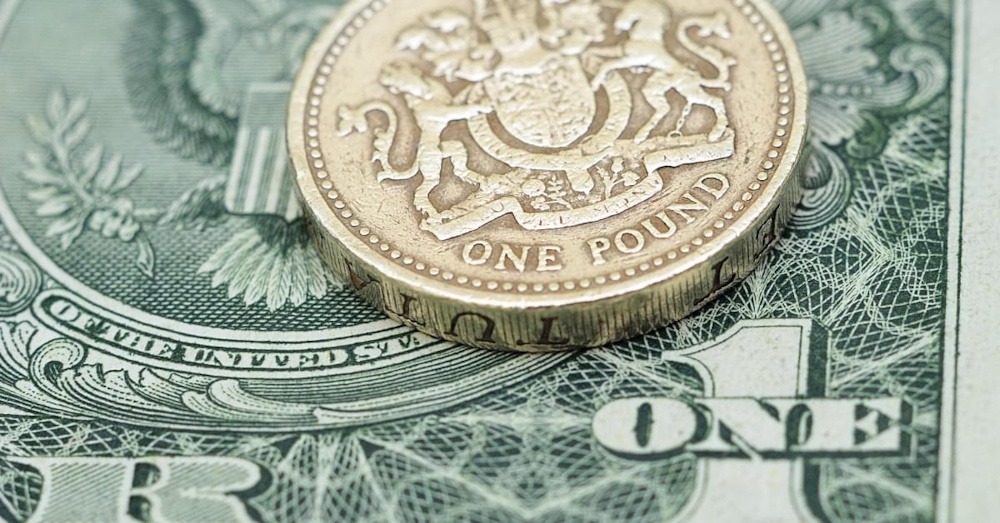
GBP/USD drifts higher to near 1.3550 in Tuesday’s early Asian session. Traders anticipate a mere 35% probability of a rate increase during the Federal Reserve’s September meeting. The UK jobs data is set to take center stage later on Tuesday. The GBP/USD pair is experiencing an uptick, reaching approximately 1.3550 in the early hours of trading on Tuesday in the Asian market. The US Dollar softens against the British Pound as cooler US inflation data have prompted traders to reduce bets on a US Federal Reserve rate hike. The UK employment report will attract significant attention later on Tuesday. The weak US Retail Sales, combined with softer-than-expected Consumer Price Index and Producer Price Index inflation data from last week, have moderated expectations regarding a potential rate increase by the US central bank at its policy meeting on September 15-16.
Market participants are currently assigning a 35% likelihood to a rate hike in September, while the probability of an increase by December stands at 69%, as indicated by the CME FedWatch tool. Bank of England Chief Economist Huw Pill stated last week that stronger-than-expected UK economic growth readings reinforced the case for higher borrowing costs to bring inflation back to target. Financial markets have incorporated expectations for at least one interest rate increase by the Bank of England this year, based on data compiled by LSEG. Market participants will pay keen attention to the forthcoming UK employment and inflation statistics later this week, as these figures may provide insights into the trajectory of the Bank of England’s interest rate policy. The UK Unemployment Rate is anticipated to decrease to 4.8% in June, down from 4.9% in May.
Better-than-expected outcomes could bolster the GBP against the USD in the near term. Strategists at Scotiabank emphasise a prudent sentiment in the market, observing that “markets are perhaps a little cautious ahead of this week’s barrage of UK data—wages, jobs, CPI, Retail Sales etc..” They indicate that the forthcoming releases are prompting investors to exercise caution regarding the Pound, even as it hovers near recent peaks against the USD. In the daily chart, GBP/USD exhibits a bullish near-term bias as the spot remains above both the 100-day simple moving average and the Bollinger middle band. The pair is advancing toward the Bollinger upper band, which caps the topside for now, while the Relative Strength Index (14) around 64 remains in positive territory but is shy of overbought, indicating that bullish momentum is constructive yet not overstretched.
On the downside, initial demand is observed at the Bollinger middle band at 1.3440, followed by the 100-day SMA at 1.3420, which serves as a deeper yet still supportive layer. The Bollinger lower band near 1.3275 indicates a more distant structural floor. On the topside, a clear break above the Bollinger upper band at 1.3605 would facilitate further gains, whereas a failure to surpass this threshold could lead to consolidation or a corrective pullback toward the clustered support zone in the mid-1.34s.