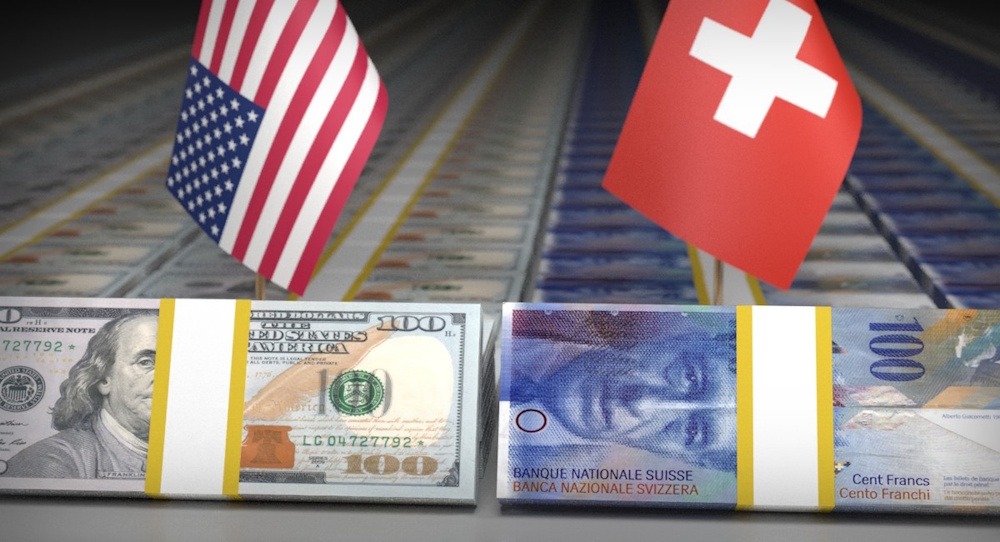
The USD/CHF pair experiences an upward movement as geopolitical tensions and escalating oil prices enhance the demand for the US Dollar relative to the Swiss Franc. Hawkish FOMC Minutes bolster market anticipations for an additional Federal Reserve interest rate increase this year. The US Treasury expanded bond buybacks to cap surging yields, which could ultimately limit further dollar gains. USD/CHF gains ground after registering handsome losses in the previous day, trading around 0.8000 during the Asian hours on Thursday. The USD/CHF pair continues to maintain its gains as the Swiss Franc remains under pressure ahead of the forthcoming domestic Trade Balance report. The Franc is experiencing a decline as Switzerland’s 10-year government bond yields remain close to one-week highs.
Market uncertainty remains high as geopolitical tensions in the Middle East escalate, leading to an increase in crude oil prices and a resurgence of inflation concerns in Switzerland. Despite these broader headwinds, domestic economic output demonstrated notable resilience, with second-quarter industrial production increasing by 5.5% year-on-year, significantly contradicting forecasts of a 4.7% contraction and recovering from a revised 7.6% decline in the previous quarter. Analysts emphasise that “for years, the Swiss central bank has struggled with the impact of haven flows into the CHF,” compelling the SNB to rely significantly on intervention threats and ultra-low policy rates to mitigate ongoing appreciation pressures. With the Franc now softer and expectations for SNB rate hikes still limited compared with the ECB, it suggests that the central bank is likely more comfortable with the current backdrop, as reduced safe haven inflows have eased one of its long-standing policy headaches.
Driving the USD/CHF pair higher is a strengthening US Dollar, bolstered by hawkish sentiment from the latest Federal Reserve Meeting Minutes. Minutes from the July FOMC meeting indicated that officials are inclined to raise interest rates in the near term should inflation not show signs of further moderation, which is consistent with prevailing market anticipations for at least one additional rate hike this year. The Greenback is gaining further safe-haven support due to geopolitical tensions in the Strait of Hormuz, where relations between the US and Iran have become increasingly strained. While former President Donald Trump noted that oil transit continues and expressed openness to negotiations with Tehran, elevated risk aversion continues to favour the US dollar.
However, the US Dollar’s upside encounters potential obstacles as the US Treasury Department intervenes to stabilise domestic bond markets. In response to rising yields and to address market liquidity issues, the Treasury has revealed intentions to at least double its buyback operations for long-dated securities with maturities ranging from 10 to 30 years. This increased intervention aims to cap long-term borrowing costs and enhance overall global US Dollar liquidity, which could ultimately exert downside pressure on the currency moving forward.