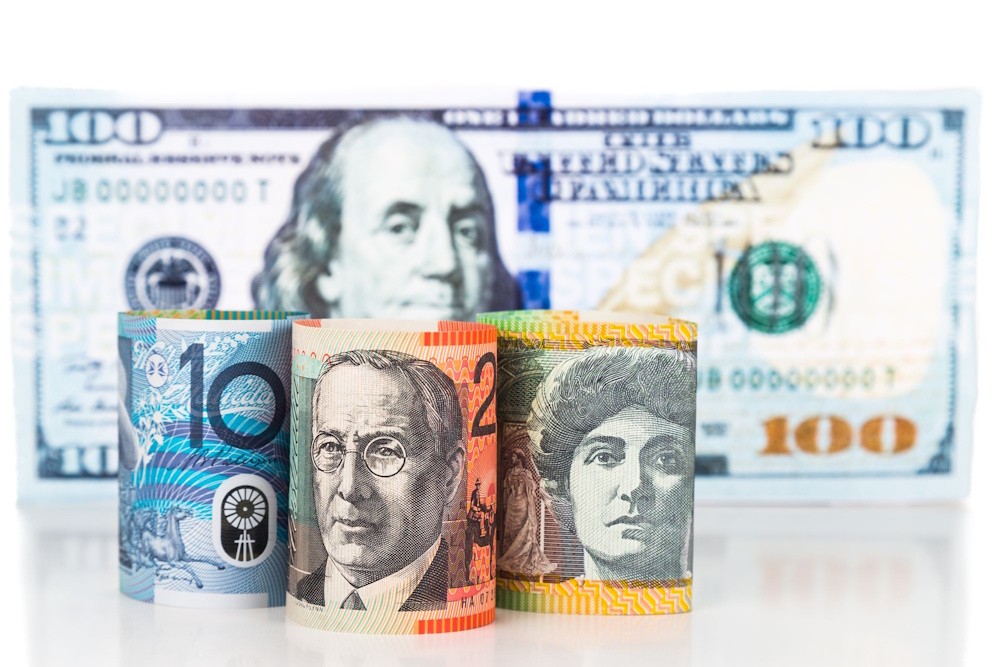
AUD/USD has softened to approximately 0.7215 in the early Asian session on Thursday. Market participants are poised for the release of crucial US inflation data this week, which is expected to offer insights into the Federal Reserve’s monetary policy trajectory. RBA’s Hunter indicated that additional tightening might be necessary to control inflation. The AUD/USD pair experiences a decline, approaching 0.7215 during the early hours of trading in Asia on Thursday. Markets exhibit a sense of caution as traders prepare for the impending release of US inflation data later this week. Additionally, rising tensions in the Middle East could exert pressure on riskier currencies such as the Australian Dollar against the US Dollar. Traders are increasing their expectations for an interest rate hike by the Federal Reserve in light of the recent robust US jobs data. The market is currently reflecting approximately 60% probabilities of an interest rate increase at the central bank’s policy meeting scheduled for next week, as indicated by the CME FedWatch Tool.
Market participants are poised to glean further insights from the forthcoming Producer Price Index data scheduled for Thursday, followed by the Consumer Price Index data on Friday. These inflation reports may provide insights into the monetary policy trajectory of the Federal Reserve in anticipation of its upcoming meeting next week. “A hot CPI print would all but seal a September hike and underpin a firmer dollar,” said Elias Haddad. “A cooler reading would strengthen the case for a hold and leave the dollar vulnerable to a dovish Fed repricing.” Hawkish signals from Reserve Bank of Australia officials may bolster the Australian dollar. RBA Assistant Governor Sarah Hunter indicated on Tuesday that the central bank might have to increase interest rates once more if inflation demonstrates greater persistence than anticipated, thereby maintaining the possibility of an additional hike at its September meeting.
Analysts note that the Reserve Bank of Australia has turned more overtly hawkish after RBA official Hauser delivered what they describe as a “hawkish speech,” which has “markets thinking of hikes this month and in November.” They add that this shift is “very much what the US Treasury would like to see – plus a lot more action on non-housing parts of the economy,” underscoring how a more restrictive RBA stance, particularly beyond the housing sector, dovetails with US policy preferences and supports a firmer near-term outlook for the Aussie. In the daily chart, AUD/USD remains positioned above the 20-day simple moving average and is comfortably situated over the 100-day SMA, indicating a favourable near-term outlook.
Price is approaching the upper half of the Bollinger envelope, while the Relative Strength Index at approximately 67 remains just below overbought territory, suggesting that bullish momentum is still robust but could be approaching stretched conditions. The lower Bollinger band and the 100-day SMA near 0.7080 represent a secondary demand point in the event of a deeper pullback. On the downside, initial support appears at the Bollinger mid-line around 0.7165. On the topside, the immediate hurdle is the Bollinger upper band at approximately 0.7250; a sustained break above this barrier would open the door for an extension of the current advance, while failure here could see the pair ease back toward the aforementioned supports.