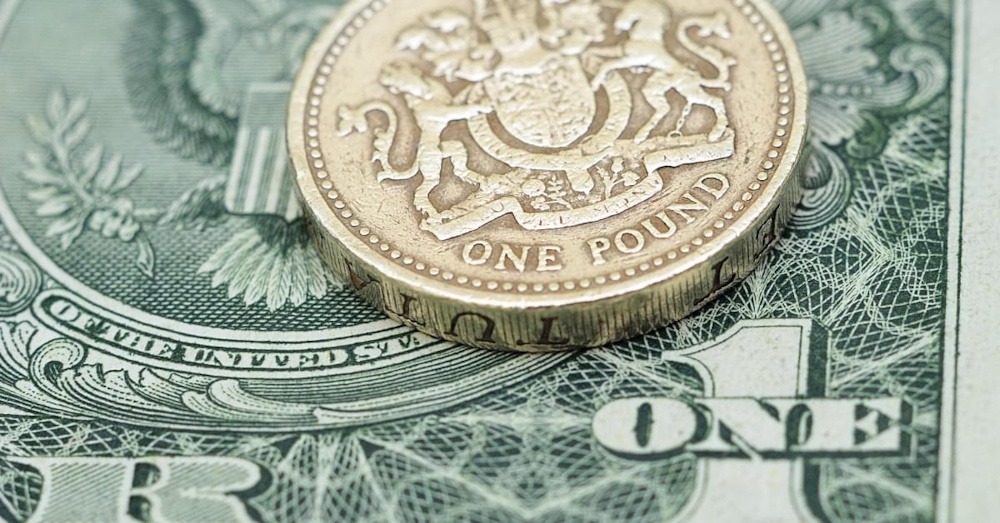
GBP/USD has weakened to approximately 1.3250 on Tuesday. Elevated US bond yields, coupled with strong fundamentals in the US economy, bolster the US Dollar. BoE’s Ramsden indicated that there may be justification for raising the Bank Rate should the inflation outlook persist in its upward trajectory. The GBP/USD pair experiences a decline, approaching 1.3250 in the early hours of trading on Tuesday in the Asian market. US Treasury yields remain above 5% at multi-decade highs, bolstering the US Dollar against the British Pound. Market participants will closely monitor the statements from Federal Reserve officials later on Tuesday. Concerns regarding inflation have been heightened by risks associated with energy supply and strong economic data from the United States, leading traders to factor in additional rate hike expectations from the Federal Reserve. Additionally, the increase in long-end Treasury yields supports the Greenback and poses a challenge for the major pair. “What’s happening is that you’ve got the US rejecting the Iranian offer and oil prices jumped, pushing upward pressure on US yields, and that is what’s lifting the dollar more broadly,” said Marc Chandler.
Conversely, hawkish statements from policymakers at the Bank of England may bolster the Cable in the short term. BoE Deputy Governor Ramsden stated on Monday that a case may arise for increasing the Bank Rate should upward pressure on the inflation outlook continue to intensify. Ramsden was among the 6-3 majority on the Bank of England’s Monetary Policy Committee that decided to maintain interest rates at their current level this month. In contrast to the US central bank, the Bank of England has refrained from increasing interest rates since the onset of the Iran war, a decision influenced in part by its pre-existing restrictive policy stance. Analysts warn that the Pound is likely to remain under pressure in the near term, highlighting that “weak UK labour demand and sluggish private sector momentum could weigh on the GBP in the near term, particularly as the US economy is looking more resilient.” They note that markets are “already pricing around 100bp of tightening from the Bank of England by July 2027,” but caution that “higher energy prices create a difficult policy mix: inflation risks are rising even as growth momentum faces a challenging outlook,” leaving the BoE navigating a more complex backdrop for GBP/USD.
BoE’s Ramsden scores 8.4/10 on FXS Speechtracker, notably above the historic 7.1/10 baseline, signalling a stronger-than-usual policy impact. The focus on external inflationary pressures stemming from energy, weather, and AI-related supply chains, in conjunction with domestic indirect impacts on food prices and the possibility of second-round effects, underscores the necessity for increased vigilance regarding enduring price risks. By indicating that risks to the inflation outlook have shifted to the upside and that persistent upward pressures could warrant an increase in the Bank Rate, Ramsden presents a distinctly hawkish stance compared to the prevailing tone. This combination of an elevated score and a clear willingness to pursue further tightening is favourable for GBP, particularly if forthcoming data corroborate the positive inflation outlook.
In the daily chart, GBP/USD maintains a bearish near-term bias as the spot price remains constrained below the Bollinger Bands simple moving average and the 100-day simple moving average. Price is positioned nearer to the lower segment of the recent Bollinger envelope, with the Relative Strength Index at 30.0 lingering just above the oversold threshold. This suggests that although downside pressure remains, the sell-off appears to be more extended than aggressive. On the topside, initial resistance is situated in the 1.3410-1.3415 range, characterised by the Bollinger middle band and the 100-day SMA. A daily close above this zone would be necessary to alleviate the prevailing bearish sentiment and pave the way toward the upper Bollinger band near 1.3645. On the downside, the lower Bollinger band at 1.3175 serves as the next support level; a breach below this threshold would strengthen the existing downside bias and reveal additional weakness toward the mid-1.31s.