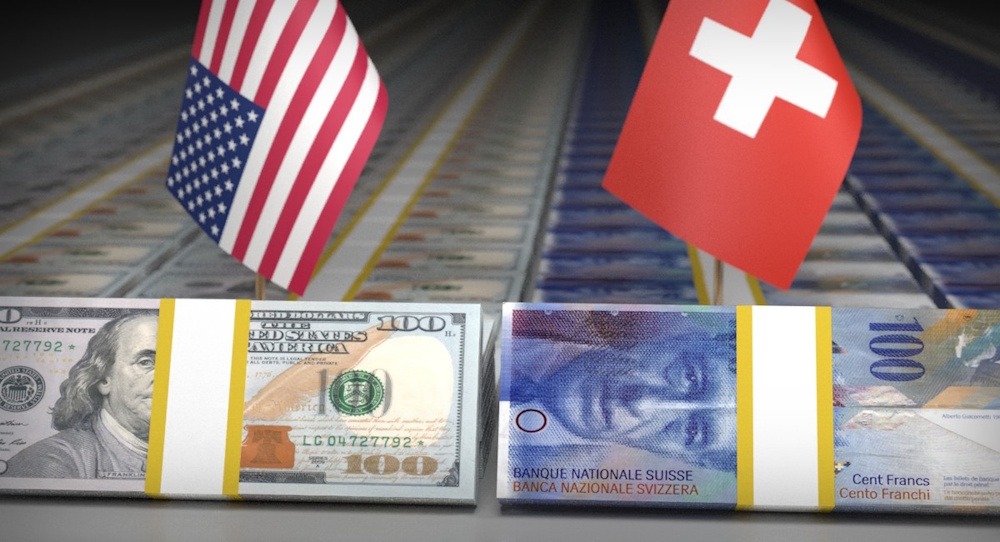
Surging US Dollar and multi-decade high Treasury yields may contribute to upward momentum for the USD/CHF pair. Weakness in the Swiss Franc appears probable, as analysts anticipate that the Swiss National Bank will uphold its policy rate at 0%. September inflation reached 1.0%, aligning with the midpoint of the SNB target range and alleviating pressure for rate hikes. USD/CHF halts its three-day winning streak, trading around 0.8330 during Asian hours on Thursday. However, the downside of the pair could be limited as the US Dollar gains solid backing from the Federal Open Market Committee’s hawkish stance amid ongoing inflation risks.
Minutes from the Federal Reserve’s September meeting disclosed unanimous backing from all 19 policymakers for the September rate hike, with a majority suggesting that an additional increase would likely be suitable by the end of the year. While there is a general consensus among market participants that the central bank will maintain its current interest rate levels during the upcoming October meeting, the CME’s FedWatch tool indicates that traders are assigning a 78.3% likelihood to a potential rate hike in December.
Further supporting the Greenback, US Treasury bond yields have rebounded back toward multi-decade highs not seen since 2002, with the 10-year and 30-year Treasury notes trading around 5.31% and 5.70%, respectively. Investors are currently directing their attention toward forthcoming statements from prominent Federal Reserve officials, such as Christopher Waller and Alberto Musalem, in search of further insights regarding the direction of interest rates. Meanwhile, the USD/CHF pair may experience additional gains as the Swiss Franc faces challenges from monetary policy dynamics.
Economists typically anticipate that the Swiss National Bank will maintain its policy rate at 0% in the years ahead, despite money markets trying to factor in as many as three rate increases in the upcoming year. Swiss inflation accelerated to 1.0% in September, driven by elevated energy costs, reaching the midpoint of the SNB’s target band. However, it remains comfortably within the central bank’s price-stability threshold, providing policymakers with little immediate impetus to tighten policy.