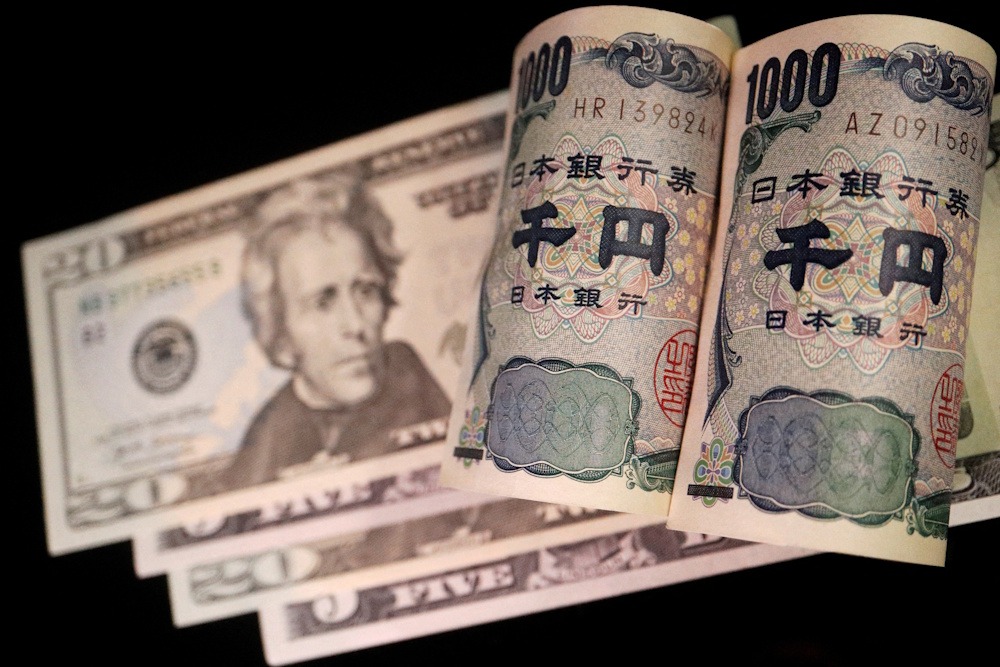
USD/JPY advances to approximately 154.55 during the early hours of Tuesday’s Asian session. Traders prepare for the Federal Reserve’s initial interest rate increase in over two years. The Bank of Japan is poised to increase its policy rate during the upcoming policy meeting scheduled for Friday in September. The USD/JPY pair advances to approximately 154.55 in the early hours of the Asian session on Tuesday. The US Dollar strengthens against the Japanese Yen as traders ramp up their bets on a US interest rate hike in September. The decision regarding interest rates by the US Federal Reserve will be the focal point later on Wednesday. The US Consumer Price Index experienced an increase in August, with a significant measure of core inflation recording its most substantial rise in four months, according to data released on Friday. This report has reinforced US rate hike expectations, lifting the Greenback against the JPY.
On Monday, money markets indicated approximately 92.4% probability of a rate hike, an increase from about 60% the previous week, as per the CME FedWatch tool. “The U.S. dollar has strengthened modestly at the start of this week, encouraged by building expectations that the Fed will begin tightening monetary policy,” said Lee Hardman. The Bank of Japan is anticipated to increase interest rates during its policy meeting scheduled for September on Friday. The most recent instance of the BoJ policy interest rate being set at 1.25% occurred in April 1995. Traders will pay close attention to BoJ Governor Kazuo Ueda’s remarks regarding the trajectory of future rate increases and the extent to which the central bank may elevate rates during the ongoing tightening phase. “A 25 bps hike is already almost fully priced,” said MUFG analysts. ”For the yen to strengthen further, the BOJ will have to signal that they are planning to stick to the faster pace of hikes,” they added.
Analysts note that speculative positioning has shifted meaningfully in favour of the Yen, with “speculators [having] unwound their short JPY positions following July’s joint US-Japan currency intervention and a shift in expectations towards further Bank of Japan tightening.” They add that the policy backdrop has also become more supportive of normalization, arguing that “by implicitly pushing back against Prime Minister Sanae Takaichi’s fiscal instincts, Bessent gave the BoJ greater political room to normalize interest rates,” reinforcing the case for a more hawkish stance from the central bank. In the daily chart, USD/JPY remains significantly below the 20-day Bollinger simple moving average and the 100-day moving average, maintaining a near-term bearish bias despite a slight recovery from recent lows.
The Relative Strength Index (14) has rebounded from oversold levels to 36, suggesting a reduction in downside momentum; however, it does not yet pose a challenge to the overarching bearish framework. On the topside, initial resistance appears at the Bollinger midline near 157.15, while the 100-day simple moving average around 159.58 provides a more substantial barrier before the upper Bollinger band near 162.05. On the downside, the lower Bollinger band at approximately 152.25 establishes the next significant support zone, and a decisive breach beneath this level would pave the way for further yen appreciation and a continuation of the corrective phase.