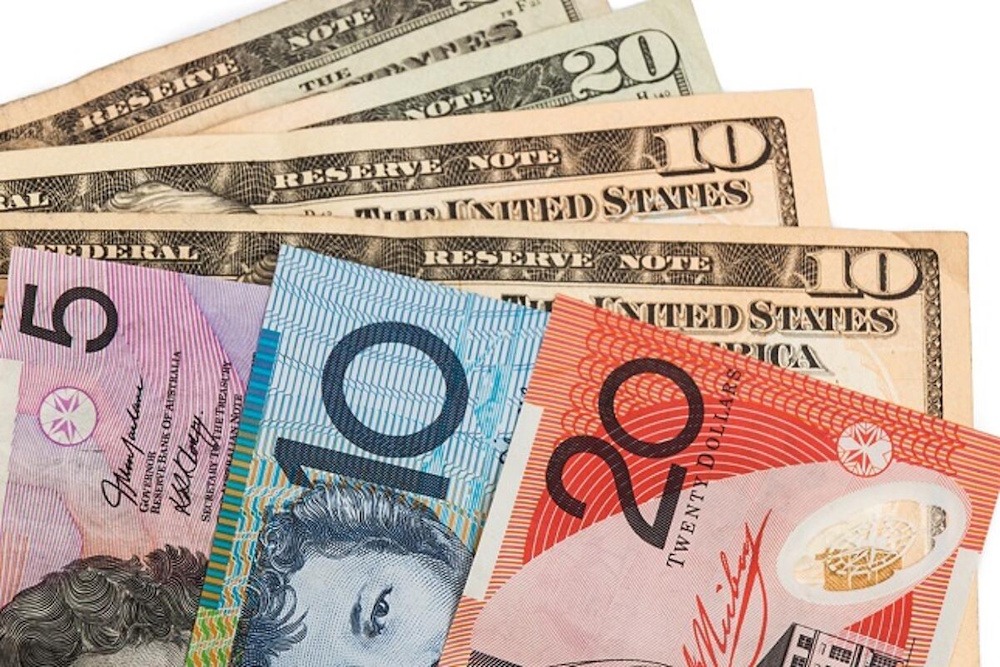
AUD/USD softens to near 0.7160 in the early hours of Monday’s Asian session. US CPI accelerated in August, reinforcing expectations that the Federal Reserve will raise interest rates on Wednesday. Hawkish signals from the RBA may serve to mitigate the Australian dollar’s declines. The AUD/USD pair experiences a slight decline, trading near 0.7160 in the early hours of the Asian session on Monday. Stronger-than-expected US inflation reports lend support to the US Dollar relative to the Australian Dollar. Attention will be focused on the decision regarding interest rates by the US Federal Reserve this Wednesday. The US Consumer Price Index experienced a month-over-month increase of 0.4% in August, resulting in a year-over-year rise of 3.4%, as reported by the Bureau of Labour Statistics on Friday. Both readings aligned with the prevailing market consensus. The core CPI, which excludes volatile food and energy prices, experienced a monthly increase of 0.3%, surpassing the market consensus of 0.2%.
On a yearly basis, it rose by 2.4%, a slight decline from the 2.5% recorded in July. The CPI inflation data mirrored robust figures in various components of the Producer Price Index released on Thursday, heightening the possibility of a Federal Reserve interest rate increase next week and bolstering the US dollar. Financial markets initially assigned an 86.2% probability to a quarter-point rate hike at the Fed’s September meeting, an increase from 72% prior to the CPI data, as indicated by CME’s FedWatch tool. A hawkish stance from the Reserve Bank of Australia could potentially mitigate the depreciation of the Australian dollar. RBA Assistant Governor Sarah Hunter indicated on Tuesday that the central bank might have to increase interest rates once more if inflation remains more stubborn than anticipated, thereby maintaining the possibility of an additional hike at its September meeting.
Strategists at UOB Group note that their medium-term stance on AUD/USD remains intact, even as price action has turned sharply lower. They recall that since last Friday, when spot was at 0.7205, their view was that the Aussie “could edge higher, but any advance is likely to stay within a 0.7160/0.7240 range.” After the pair “edg[ed] higher for several days and reach[ed] a high of 0.7238 two days ago,” UOB highlights that AUD then “plunged and closed 0.83% lower at 0.7157 yesterday.” The bank stresses that this “rapid increase in downward momentum indicates that AUD could decline toward 0.7120,” marking a shift toward a more bearish near-term bias. However, UOB also cautions that if AUD were to break above “0.7210 (‘strong resistance’ level), it would mean that it is likely to continue to trade in a range,” keeping the broader 0.7160–0.7240 consolidation scenario in play over the next one to three weeks.
In the daily chart, AUD/USD remains positioned above the 100-day moving average and the lower Bollinger Band, indicating a positive near-term outlook, while the price is currently probing the region just beneath the middle Bollinger Band. The Relative Strength Index (14) at 54 indicates a modestly positive stance, suggesting that buyers maintain a degree of control without exhibiting excessive momentum. On the topside, immediate resistance emerges at the middle Bollinger band at 0.7170, followed by the upper band near 0.7235, where upside attempts could begin to stall. On the downside, initial support is situated at the lower Bollinger band near 0.7100, followed by the 100-day moving average at 0.7080. A breach of this level would undermine the bullish sentiment and reveal the potential for more significant retracements.