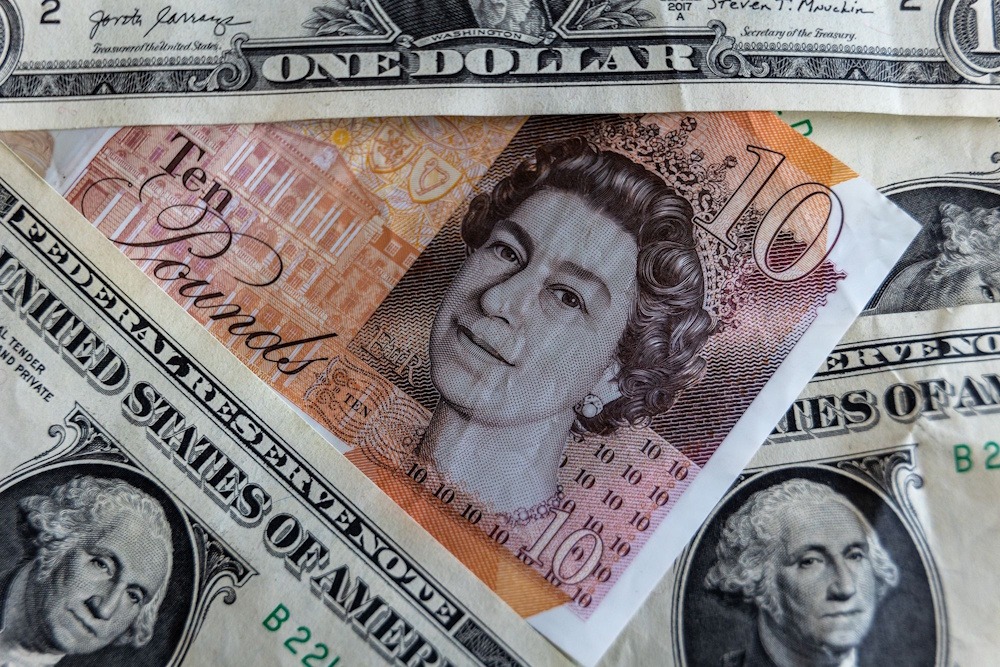
GBP/USD is experiencing upward momentum, approaching the 1.3260 mark during the early hours of Wednesday’s Asian session. Market participants estimate a probability of approximately 77.3% that the Federal Reserve will maintain the current interest rates during its upcoming meeting on October 27-28. Bailey of the Bank of England indicated that firms are prioritising cost management. The GBP/USD pair strengthens to approximately 1.3260 during the early Asian trading hours on Wednesday. Dovish signals from New York Federal Reserve President John Williams exert downward pressure on the US Dollar against the British Pound. Attention will be focused on the US September Consumer Price Index inflation data later on Wednesday. Fed’s Williams on Tuesday reaffirmed his view that the US central bank may need to raise interest rates once more this year in its bid to lower inflation. “I haven’t changed my view that it may be appropriate to have one more rate hike in 2026, said Williams. And when it comes to 2027, “I don’t think at this time I have any reason to believe that we would need to do more,” he added.
Markets currently reflect a probability of approximately 77.3% that the Federal Reserve will maintain interest rates at the upcoming meeting on October 27-28. However, there is an 87.8% likelihood of an increase being implemented at the final meeting of the year in December, as indicated by the CME FedWatch tool. Bank of England Governor Andrew Bailey stated on Tuesday that firms in the UK are concentrating heavily on managing their expenses in light of the spike in energy prices resulting from the conflict in Iran. Bailey reiterated that the pressure on broader inflation in the UK from the energy shock has, to date, been subdued. Traders are assigning a high probability to a quarter-point rate hike by the UK central bank next month, viewing it as almost inevitable. Analysts argue that the policy backdrop remains broadly supportive for GBP, even if current market pricing looks stretched. They “still think BoE rate expectations are too hawkish for 2027 (100bp by July),” but concede that “one or two hikes are looking increasingly likely,” with any “dovish shift” in policy likely to “have to wait until well into 2027, underpinning GBP strength.” On the fiscal side, ING flags the “UK budget on 28 October” as “a potential risk for sterling, as markets are pricing in little fiscal concern.”
However, they note that Chancellor John Healey and Prime Minister Andy Burnham “have appeared mindful of market sensitivities,” and while the budget “will be closely scrutinised,” ING says they “do not currently expect it to trigger significant bond volatility or leave a lasting negative mark on GBP.” Fed’s Williams conveyed a notably softer message, with the FXS Speechtracker score at 3.4/10, significantly below the historical average of 5.8/10, indicating a more dovish stance compared to the established baseline. The clear indication that a rate hike is unnecessary in 2027, combined with the assurance that inflation will significantly decrease toward the 2% target next year, strengthens the outlook for an extended pause and, in turn, lends support to a marginally weaker Dollar bias. However, the focus on inflation continuing to trend toward the target rather than being completely realised prevents the overall policy stance from becoming distinctly dovish. The FXS Fed Sentiment Index decreased by 3.09 points to 133.86, signifying a notable retreat in perceived hawkishness subsequent to the speech.
Despite this decline, the index remains significantly above the neutral 100 level, indicating that overall Fed communication continues to reside in hawkish territory, even as Williams’ remarks reflect a softer tone relative to the established baseline captured by the FXS Speechtracker. In the daily chart, GBP/USD is positioned precisely at the 20-period Bollinger simple moving average, constrained beneath the 100-day simple moving average and the upper Bollinger band, which maintains a bearish bias in the near term. The Relative Strength Index at 44 suggests subdued upside momentum, indicating that recent rebounds lack conviction as price remains below the broader trend indicator. On the topside, immediate resistance is concentrated between the upper Bollinger band at 1.3375 and the 100-day SMA at 1.3395, where sellers are expected to re-emerge on any bounce. On the downside, initial support is observed at the lower Bollinger band near 1.3150. A daily close below this zone is likely to extend the decline toward lower levels as bearish pressure continues.