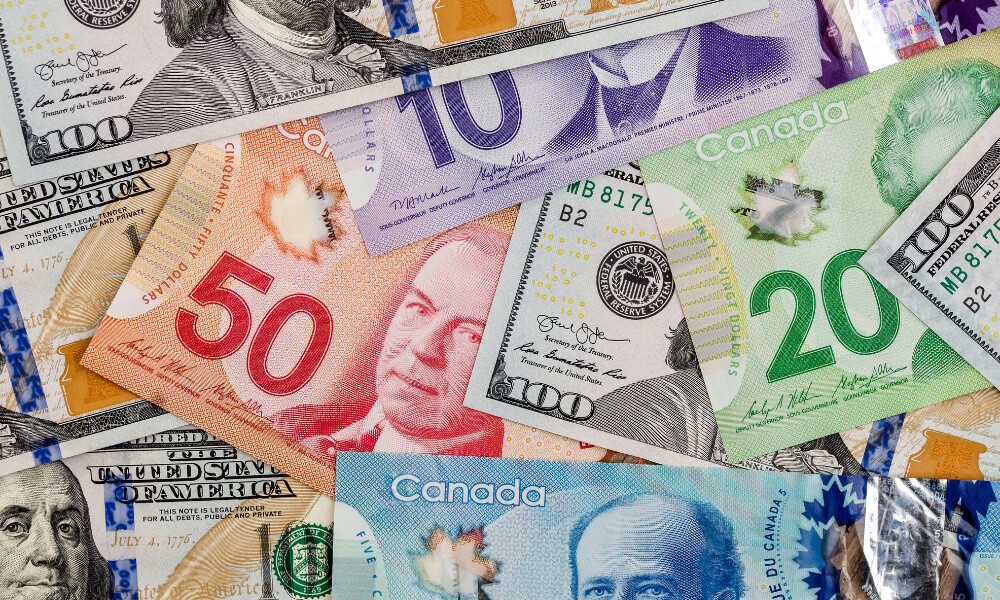
USD/CAD remains steady amid rising crude oil prices, providing support for both currencies. Geopolitical tensions and disruptions in shipping through the Strait of Hormuz have resulted in an increase of over 10% in oil prices this month. Ongoing US-Iran peace negotiations and Fed Chair Warsh’s perspective on the neutral rate maintain a sense of caution among traders. USD/CAD shows minimal movement following four consecutive days of declines, hovering near 1.4060 during the Asian trading session on Wednesday. The currency pair maintains its stance as the US Dollar remains robust amid rising oil prices that have intensified inflation concerns and fuelled safe-haven demand. However, the commodity-linked Canadian Dollar is also poised to appreciate due to rising crude prices, which could limit additional upward movement for the USD/CAD pair. Crude oil prices experienced an uptick as traders assessed conflicting reports concerning diplomatic initiatives between the United States and Iran.
While negotiations remain active, market sentiment encountered challenges following high-level diplomatic meetings. Pakistan’s army chief, Field Marshal Asim Munir, engaged with senior Iranian diplomatic and military leaders in Tehran to deliberate on bilateral relations and the current state of discussions with Washington. Clarifying the situation, a diplomat involved in the discussions confirmed that efforts to resolve the conflict are ongoing, while dismissing reports that a final agreement was imminent. Crude oil prices have experienced an increase exceeding 10% this month, driven by escalating global supply risks. Escalating tensions involving Saudi Arabia, Iran-backed Houthi forces, Russia, and Ukraine have heightened geopolitical risks, further amplified by at least 18 vessel attacks in the Strait of Hormuz over the past two weeks. Nevertheless, energy infrastructure has shown a notable degree of resilience, as oil flows from the Middle East have rebounded to approximately 80% of their prewar levels.
Meanwhile, financial markets persist in assessing the trajectory of the Federal Reserve’s monetary policy following recent remarks from Fed Chair Kevin Warsh. Chair Warsh underscored that he does not “prejudge” interest rate decisions, thereby leaving traders without a definitive indication regarding whether the central bank will increase or maintain rates at its forthcoming October policy meeting. In the daily chart, USD/CAD is positioned at 1.4060, maintaining a bearish near-term outlook as the spot remains below both the 50- and nine-day Exponential Moving Averages. The 14-day Relative Strength Index has retreated to approximately 42.7, indicating a decline in upward momentum following the recent pullback from the peaks. Meanwhile, the FXS Fed Sentiment Index’s latest reading close to 127.5 implies a diminished policy premium relative to earlier in the rally. On the topside, initial resistance is positioned at the 50-day EMA at 1.4075, succeeded by stronger supply near the nine-day EMA at 1.4140, which collectively constrains recovery efforts. A more significant barrier remains the horizontal resistance line at 1.4794, where the broader uptrend would face a major test if bulls attempt a renewed extension.
Fed Chair Warsh conveyed a moderately constructive tone, avoiding an excessively hawkish stance, as reflected by the FXS Speechtracker score of 5.6/10, which is slightly below the historical average of 6.1/10. The acknowledgement of being “over-scarred from the global financial crisis” emphasises a persistent inclination toward prudence regarding financial stability, even as Warsh points out structural growth and an investment boom propelled by “good policies. Warsh’s emphasis on AI as an immediate demand driver and a mechanism to enhance data confidence, coupled with a reluctance to pre-judge forthcoming meetings, indicates a data-dependent approach that moderates policy signalling for the Dollar. The FXS Fed Sentiment Index remained stable, registering no change at a notable level of 127.51. This indicates that the speech maintains the overarching policy narrative in a hawkish stance, even with the marginally lower FXS Speechtracker score. In the FX markets, the interplay of elevated index readings and Warsh’s prudent assessment of crisis impacts indicates that the Dollar is supported by anticipations of sustained attention to inflation and financial stability, rather than a forthcoming dovish shift.