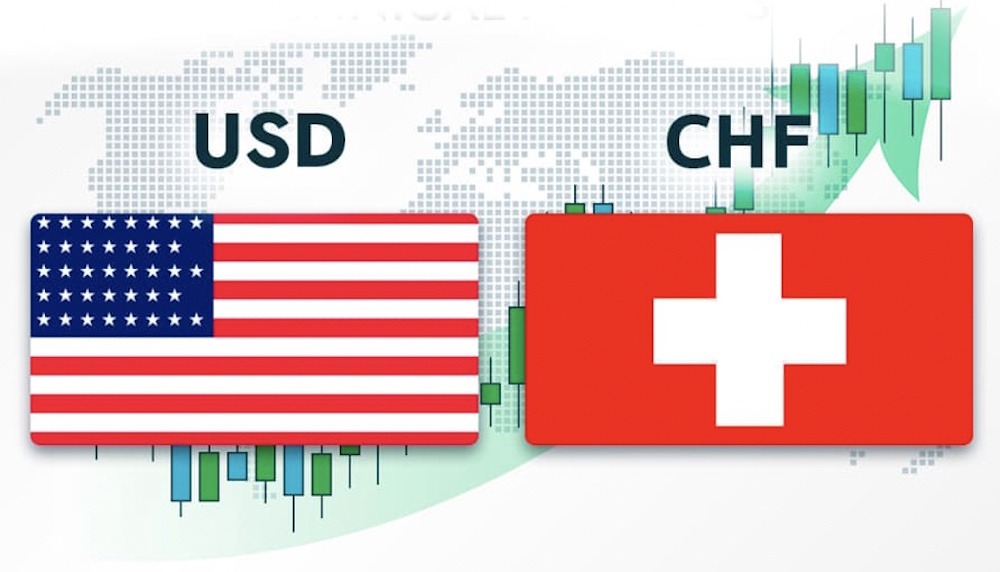
USD/CHF advances as the US Dollar finds support despite increasing scepticism regarding the sustainability of AI trade. The Swiss Franc may further strengthen alongside falling Swiss 10-year bond yields, driven by escalating Middle East geopolitical risks. The SNB Minutes indicated an increase in inflation attributed to elevated oil prices and previous currency depreciation, while noting the absence of wider domestic spillover effects. USD/CHF maintains its position following three consecutive days of declines, trading at approximately 0.8210 during the Asian trading session on Friday. The currency pair has inched higher as the US Dollar recovers its daily losses despite mounting doubts regarding the sustainability of the AI trade. Investor confidence diminished following the quarterly earnings reports from various megacap technology firms, which did not align with anticipated outcomes.
Meanwhile, the intensifying geopolitical conflict in the Middle East has led to an increase in overall market risk aversion. Reports indicating that the US and Israel are preparing additional military strikes against Iran following the upcoming midterm elections have intensified safe-haven demand, bolstering both the Japanese Yen and Swiss Franc against the Greenback. Meanwhile, officials at the Federal Reserve have expressed minimal urgency regarding the acceleration of policy tightening. Fed Chair Kevin Warsh recently conveyed a positive outlook on the fundamental robustness of the US economy while abstaining from indicating whether further interest rate increases might be necessary. Despite this measured guidance, market participants utilising the CME FedWatch Tool currently assign a 92.8% probability to a rate pause at the upcoming October 27-28 policy meeting.
Looking ahead, the USD/CHF pair may encounter additional downside pressure as the Swiss Franc could gain support from safe-haven flows. The yield on the Swiss 10-year government bond declined to approximately 0.48%, bolstered by safe-haven demand in light of persistent worries regarding Europe’s fiscal outlook. Recent SNB meeting minutes indicated that Swiss policymakers noted increasing inflationary pressures, yet without significant spillover effects into the domestic economy. The rise was primarily attributed to elevated oil prices and the prior weakness of the franc. The Swiss National Bank has kept its policy rate at 0%, with Chair Martin Schlegel indicating that no modifications are necessary at this time, given that inflation continues to be stable within the target ranges. While economists anticipate that rates will remain unchanged until 2027, financial markets are presently factoring in the possibility of a rate increase in early 2027.
Strategists at UOB Group reiterate their cautious stance on USD/CHF over the 1-3 week horizon, noting that recent price action has unfolded broadly in line with their earlier guidance. They recall that last Friday, 16 October, with the spot trading near 0.8280, they had highlighted that “downward momentum is building and if USD closes below 0.8245, it could decline toward 0.8225.” After the pair subsequently slipped to a low of 0.8215, UOB updated its view on Monday, 19 October, when spot was around 0.8240, stating that USD “could decline further to 0.8200.” The bank now emphasizes that it will “maintain our view as long as USD holds below 0.8275,” which they continue to flag as a “strong resistance” level, previously set at 0.8290.