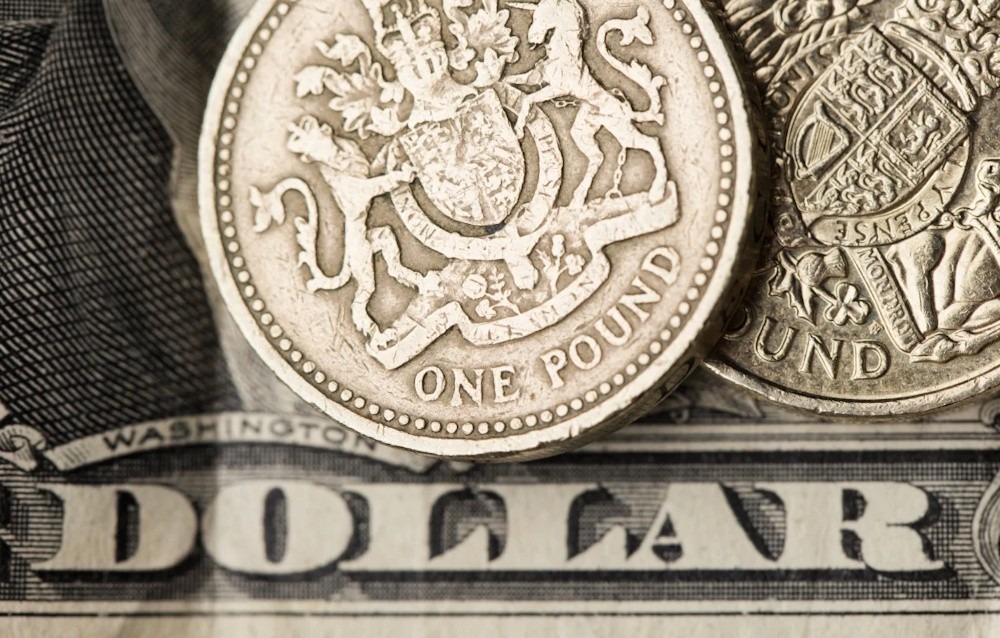
GBP/USD remains stable at approximately 1.3390 during the Asian session on Monday. Markets are significantly factoring in expectations that the BoE will elevate the Bank Rate to 4.0% during its policy meeting in November. Traders prepare for the Bank of England’s rate decision on Thursday, coinciding with the release of US jobs data. The GBP/USD pair remains stable around 1.3390 during the Asian trading hours on Monday. Traders are inclined to remain on the sidelines in anticipation of significant events scheduled for later this week. The Bank of England’s interest rate decision will be the focus of attention on Thursday. On Friday, focus will turn to the employment statistics for the United States for the month of October. Economists anticipate that the Bank of England will increase the Bank Rate to 4.0% from 3.75% during its policy meeting in November on Thursday. This would mark the initial increase since August 2023, a period during which inflation remained above the BoE’s 2% target. The BoE hawkish bets could provide some support to the British Pound against the US Dollar.
“While we don’t expect a clear steer from the Committee on how many hikes they’re planning, it’s possible that the meeting minutes or Bailey … signal that Bank Rate is unlikely to reach the level that is priced in by financial markets,” said Alexander Harvey. The US midterm elections and employment report will be under scrutiny this week. The Nonfarm Payrolls is anticipated to increase by 65,000 in September, whereas the Unemployment Rate is expected to remain steady at 4.2% for the same timeframe. Any signs of improvement in the US labour market could bolster the Greenback and serve as a headwind for the major pair in the near term. Strategists highlight that the Pound has “held up better than expected despite the fiscal strain from higher energy costs,” with the latest UK Budget seen as a key stabilising factor. They note that the Budget “avoided adding to those concerns,” as it “stayed within the fiscal rules and preserved GBP15bn of headroom against the stability rule, even after absorbing some of the impact from the Middle East conflict.” OCBC adds that the broader UK backdrop “remains relatively supportive.” Growth has “proved resilient,” with the OBR upgrading its “2026 growth forecast to 1.2%.”
In their view, “greater political stability and fiscal discipline should continue to offer GBP some relative support,” while “closer UK-EU economic ties could provide an additional medium-term tailwind.” However, the bank cautions that “the easy gains may be behind us.” OCBC points out that markets are “already pricing an aggressive Bank of England tightening cycle, with a November hike heavily discounted and substantially more tightening priced into 2027.” With “plenty of tightening already in the price,” they conclude that “the bar for the next leg higher in GBP is getting increasingly high.” BoE’s Greene achieves a score of 7.4/10 on FXS Speechtracker, aligning precisely with Greene’s historical average, indicating a steady hawkish stance rather than an intensification. Emphasising that wage disinflation has stagnated at levels exceeding those consistent with 2% inflation, coupled with the notion that policy should actively counter second-round inflation risks, strengthens the inclination to maintain UK rates elevated for an extended period and provides marginal support for GBP. Greene’s observation that the risk of second-round effects is greater than previously anticipated, despite forward-looking data indicating pay growth nearer to 3.5% and the economy demonstrating unexpected resilience, implies a constrained willingness for immediate easing.
The indication that labour market slack may have peaked underscores concern that renewed wage pressures could re-emerge, aligning the speech with a steady-to-hawkish stance that tempers expectations for aggressive BOE rate cuts and underpins GBP relative to peers. In the daily chart, GBP/USD exhibits a slightly bullish near-term inclination as it remains above the 100-day simple moving average and the middle simple moving average of the Bollinger Bands. Price action remains positioned beneath the upper Bollinger band, indicating potential for additional upward movement, while the Relative Strength Index (14) hovering around 56 maintains a positive outlook without crossing into overbought conditions. On the topside, immediate resistance is observed at the upper Bollinger band near 1.3450, where recent gains may begin to encounter supply. On the downside, initial support aligns with the 100-day simple moving average at 1.3385, followed by the middle band of the Bollinger bands at 1.3310. A deeper safety net emerges at the lower Bollinger band near 1.3175 should corrective pressure extend.