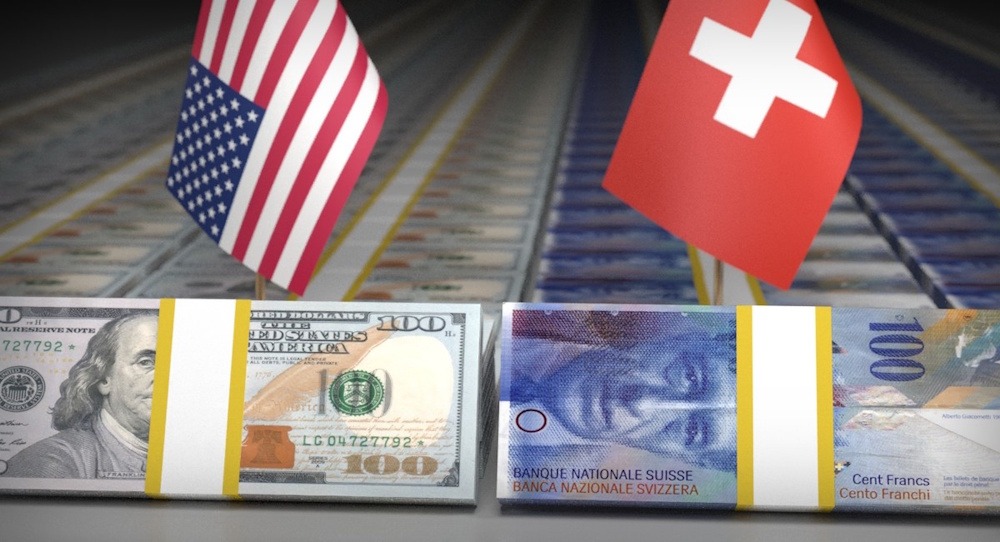
The Swiss Franc strengthens as market caution and expectations of political gridlock drive safe-haven demand. The upside for the greenback appears constrained as US bond yields decline and expectations for Federal Reserve rate hikes are reduced. SNB is anticipated to maintain its current interest rates, as Chair Schlegel affirms that inflationary pressures in Switzerland remain under control. USD/CHF remains unchanged after rebounding from earlier losses, currently trading at approximately 0.8170 during the Asian trading session on Friday. The pair has reduced its daily losses as the US Dollar gained support amid widespread market caution. Investors are closely monitoring the impending US Nonfarm Payrolls report, anticipated to significantly influence market expectations regarding the Federal Reserve’s December policy decision.
However, the potential appreciation of the Greenback may be limited as US bond yields have decreased. A Democratic sweep led to a decline in oil prices, fuelled by speculation that the election would hasten the conclusion of the Iran war. This development also encouraged traders to reduce their expectations regarding potential rate hikes by the US Federal Reserve. Markets are currently reflecting an approximate 70.9% likelihood that the Federal Reserve will implement a rate increase in December, as indicated by CME’s FedWatch tool. Furthermore, the Democrats’ victory has heightened expectations of political gridlock in Washington, which may restrict government spending and ultimately result in slower economic growth. The Swiss Franc appreciated as the Democratic sweep heightened expectations for stricter regulation of the AI development and increased demand for safe-haven assets. This outcome could also result in political gridlock and heighten the likelihood of fiscal restraint in the US.
However, increased demand for safe-haven assets could lead traders to unwind franc-funded carry trades, which had previously profited from the expanding interest rate differential with the US and significantly impacted the CHF. Swiss borrowing costs have persisted at the lowest levels globally for more than a year, rendering the franc a compelling funding currency for investments that offer higher yields. Looking ahead, the Swiss National Bank is unlikely to increase rates in the near term. This position is further bolstered by Chair Schlegel’s comments, which emphasised that inflationary pressures in Switzerland continue to be restrained. In October, Swiss inflation experienced an uptick attributed to increased energy costs and a depreciated franc. However, the subsequent appreciation of the currency may alleviate some of the pressures associated with imported costs.
Analysts at UOB Group maintain a cautious, negative stance on USD/CHF over the one-to-three-week horizon, noting that the pair has yet to fully confirm a deeper downside extension. They recall that, “tracking our negative USD view from late last week, we highlighted yesterday that USD ‘must break and hold below 0.8140 before further declines can be expected.’ We added, ‘the next level to watch below 0.8140 is 0.8110.’” While USD/CHF did “break below 0.8140,” it subsequently “rebounded to close at 0.8168 (-0.46%),” meaning the close failed to validate a clean break of the level. Even so, UOB points out that “given the sharp decline to 0.8124, there is a chance for USD to test 0.8110 before the risk of a recovery increases.” On the topside, they stress that “a breach of 0.8205 (‘strong resistance’ was at 0.8220 yesterday) would mean that 0.8110 is not coming into view,” marking 0.8205 as the key barrier that would negate the immediate downside scenario.