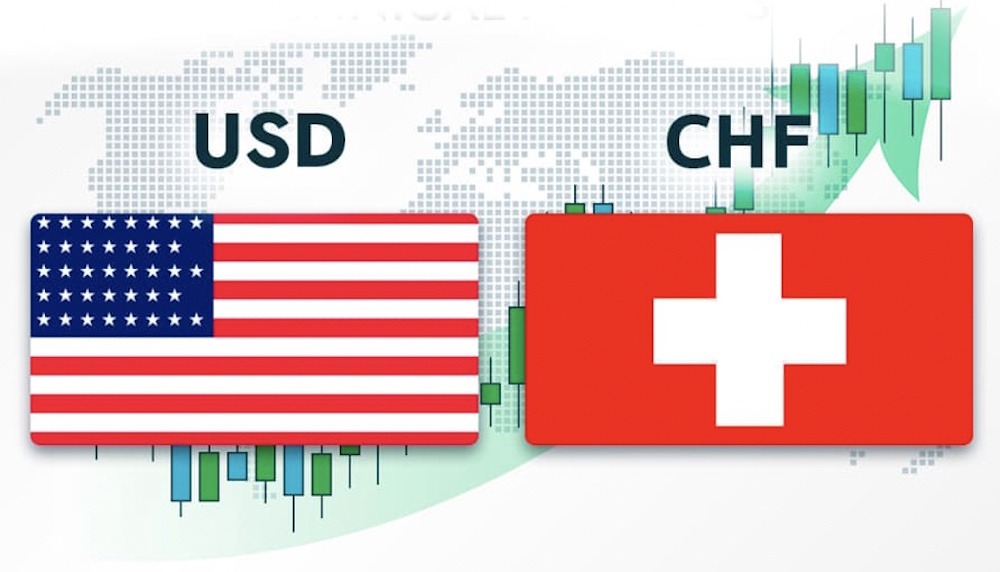
Swiss Franc gains support as annual CPI is projected to rise to 1.3%. Switzerland presents a complex economic landscape, characterised by a decline in retail sales juxtaposed with robust growth in the manufacturing sector. The USD has seen a depreciation against the CHF, driven by uncertainties related to the US elections and expectations regarding upcoming Nonfarm Payroll data. USD/CHF remains flat after losing its daily gains, trading around 0.8180 during Asian hours on Tuesday. The pair encounters difficulties as the Swiss Franc gains support in anticipation of the upcoming domestic Consumer Price Index data release. Swiss monthly inflation is expected to remain unchanged at 0% in October, while the annual CPI is forecasted to increase to 1.3%, compared to the previous rate of 1.0%.
Monday data indicated that Swiss Real Retail Sales experienced a year-on-year increase of 1.6% in September, a deceleration from the upwardly revised 3.9% rise observed in August, and falling short of expectations for a 3% gain. This marked the smallest increase since March. In October, the SVME Manufacturing Purchasing Managers Index rose to 56.7, up from 55.3 in September. This figure exceeded market expectations of 55.3 and marks the eighth consecutive month of expansion. The USD/CHF pair experienced a decline in its daily gains as the US Dollar faces challenges in the lead-up to the US midterm elections. Political pressure on US President Donald Trump and the Republican Party has escalated due to increasing energy prices linked to ongoing conflicts involving Iran.
Meanwhile, prediction markets currently indicate a 74% probability of the Democratic Party gaining control of the US Senate, underscoring the heightened political stakes associated with the vote. Meanwhile, market participants are closely observing the upcoming US jobs report scheduled for release later this week. The employment data is expected to offer fresh insights into the state of the labour market and shape expectations concerning future monetary policy decisions. The Federal Reserve has maintained a hawkish stance, with the CME FedWatch Tool suggesting a roughly 73% likelihood of a rate hike in December following a policy pause in October.
Commerzbank’s Norman Liebke warns that the results of the US midterm elections will continue to influence the Dollar in the short term, despite being just one of multiple factors at play. He contends that “the election result is unlikely to be entirely irrelevant for the dollar,” cautioning that if the Republicans were to lose their majorities in both chambers, “the dollar could come under greater pressure, as the Trump administration would have less political backing overall.” Liebke notes that a more constrained transition in Washington would also have implications: “If only the House of Representatives changes hands, the dollar would likely face some headwinds as well, albeit to a lesser extent.”