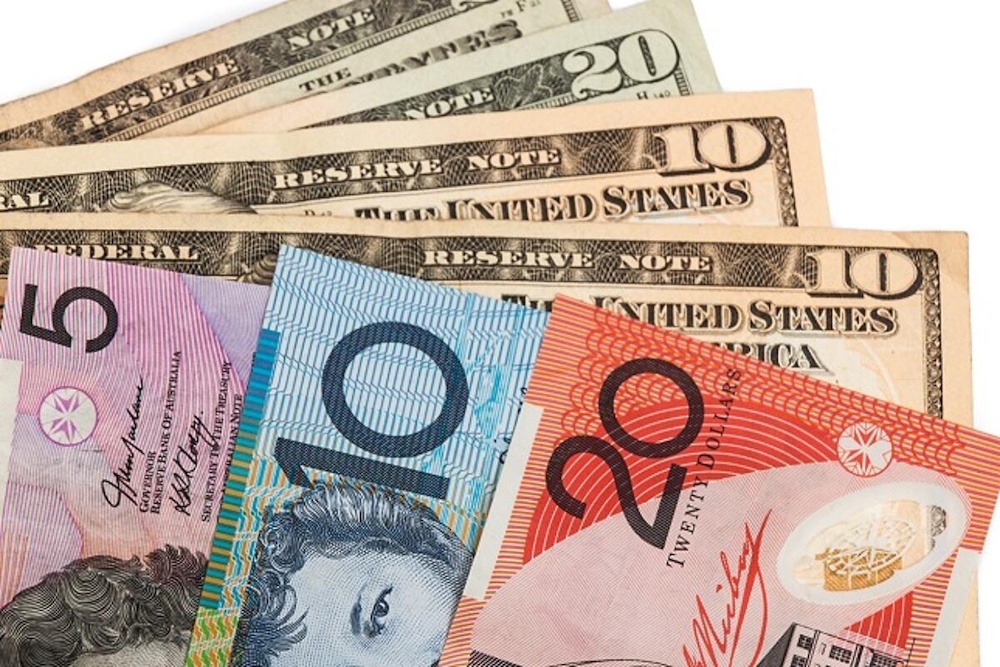
AUD/USD softens to near 0.7015 in Thursday’s early Asian session. RBA’s Hauser indicates that the inflation outlook has significantly deteriorated compared to the bank’s previous forecasts, increasing the likelihood of an additional rate hike as early as November. The forthcoming trajectory of the Federal Reserve’s policy continues to serve as a significant driver of market dynamics. The AUD/USD pair experiences a decline in momentum, settling at approximately 0.7015 during the early hours of trading in Asia on Thursday. Risk-off sentiment and the movement toward safe havens lend some support to the US Dollar in its exchange rate with the Australian Dollar. Traders will monitor the upcoming weekly US Initial Jobless Claims data, scheduled for release later on Thursday. An Iranian official has issued a warning regarding potential actions against US political figures should American strikes recommence, as reported. This signifies a notable intensification in the alerts issued by Tehran. Meanwhile, the Saudi-led coalition announced early Wednesday that it successfully intercepted and destroyed five drones that had been launched toward Saudi Arabia. Ongoing tensions in the Middle East may enhance the appeal of safe-haven currencies like the Greenback, potentially presenting a challenge for the pair.
On the Australian dollar, traders increase their positions in anticipation of a rate hike by the Reserve Bank of Australia following Andrew Hauser’s comments. RBA monetary policy board member Hauser on Wednesday cautioned that the inflation outlook was “materially worse” in the coming months. He cautioned that the inflation outlook was “materially worse” in the coming months. The likelihood of an interest rate increase during the November policy meeting surged from 30% prior to Hauser’s remarks to 45%, as reported by the Guardian. If delivered, it would mark the fifth rate increase for the year, resulting in an Official Cash Rate target of 4.85%, up from the current 4.6%, representing the highest level since the global financial crisis. Analysts note that the Australian rate market has shifted “to price in a higher probability of another RBA rate hike before the end of this year” after hawkish remarks from RBA Deputy Governor Andrew Hausner. He warned that the inflation outlook looks “materially worse” than the RBA’s August forecasts, highlighting that “we’re seeing higher AI prices, tech prices feeding through into CPI…and we’re having a boom in data centre construction here in Australia as well, so that’s upside too, and then on domestic capacity pressure”.
MUFG emphasises that Hausner also voiced concern that “inflation has been high for a very long time now, and we are beginning to see some signs that people in the community are not sure if we’re going to bring inflation back to target, or certainly not for an extended period”. In response, the bank notes that these hawkish comments have encouraged market participants to price in “closer to a 50:50 probability of another RBA hike next month”. Fed Chair Warsh conveyed a message that was moderately constructive yet cautious, as indicated by the FXS Speechtracker score of 5.6/10, which falls short of the historical average of 6.1/10, suggesting a somewhat diminished conviction compared to the established baseline. The acknowledgement of being “over-scarred from the Global Financial Crisis” emphasises a continuing inclination toward risk aversion, despite Warsh’s emphasis on a structural growth and investment increase propelled by “good policies” and his reluctance to pre-commit to decisions for October and December. Emphasising AI as a near-term demand shock and a future support for data confidence indicates that the Fed is embracing technological tailwinds while staying vigilant regarding the uncertain effects on the labour market and potential risks to financial stability.
The FXS Fed Sentiment Index remained stable, registering no change at 127.51, which continues to reflect a robustly hawkish position, even in light of the marginally lower FXS Speechtracker score. The combination of a high index level and non-committal forward guidance suggests that markets persist in pricing a restrictive Fed reaction function. Warsh’s emphasis on output, employment, inflation, and tail risks further strengthens the inclination to uphold tight policy instead of indicating an imminent pivot. In the daily chart, AUD/USD remains positioned just below the 100-day simple moving average and the upper band of the Bollinger Bands, indicating a cautious limitation on the upside at this moment, while the midline of the Bollinger Bands provides immediate support. The Relative Strength Index (14) around 51 suggests a mildly positive yet non-committal momentum, aligning with a neutral near-term bias as price fluctuates around the 0.70 handle. On the topside, immediate resistance aligns at the 100-day SMA at 0.7035, followed closely by the Bollinger upper band at 0.7035, a tight supply zone that bulls would need to clear to extend gains. On the downside, initial support is observed at the Bollinger middle band around 0.6975, with the lower band near 0.6915 indicating a more robust floor should selling pressure reemerge.