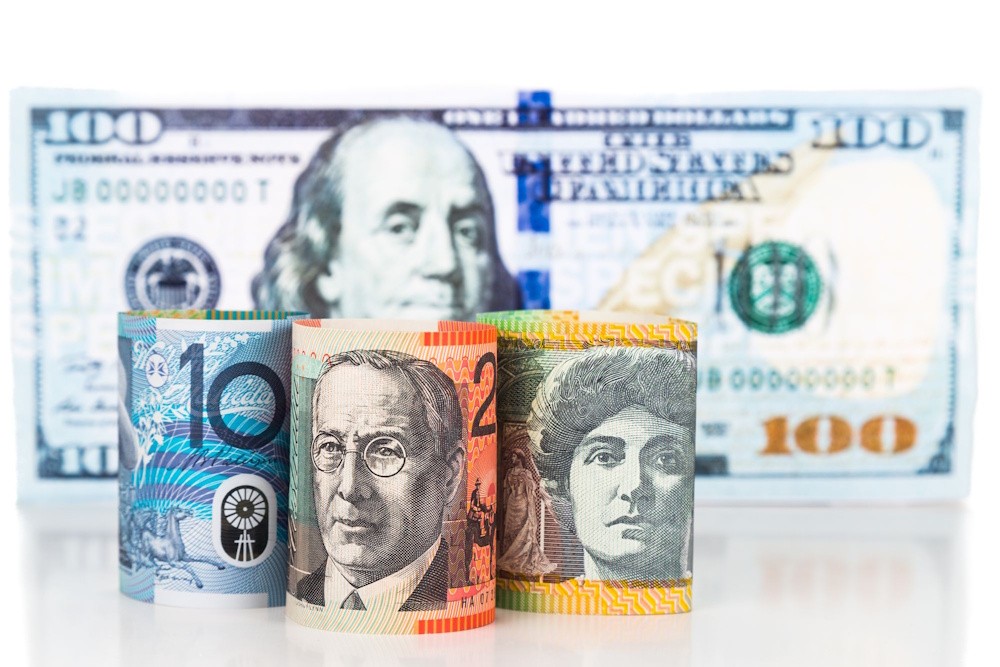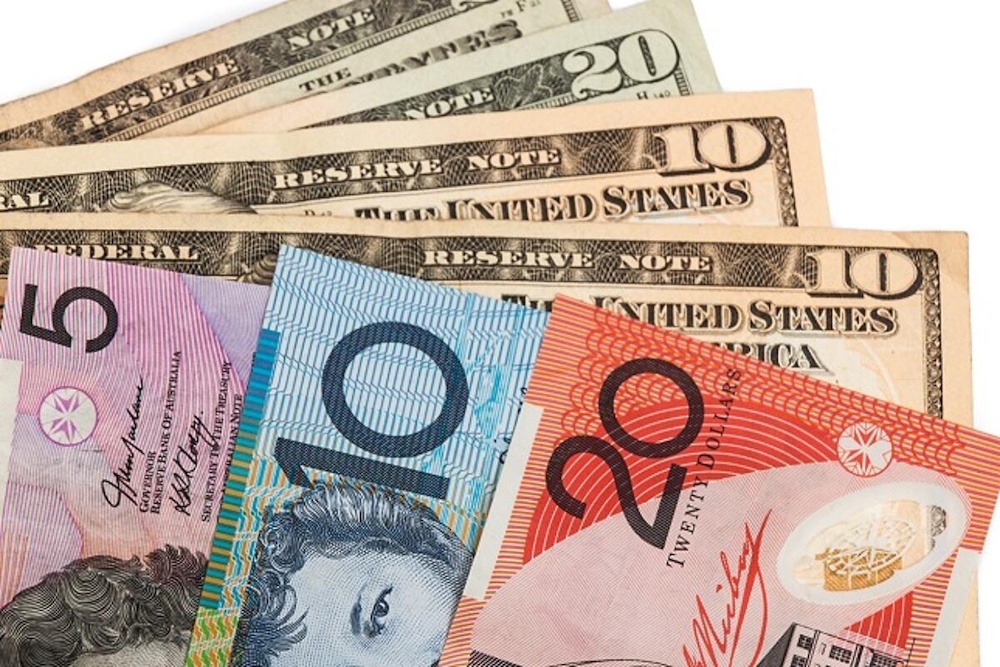
AUD/USD experiences slight declines, hovering around 0.6730 during the early hours of Tuesday’s Asian session. The RBA increased interest rates due to persistent upward price risks, as indicated in the RBA Minutes. Strong US inflation figures and expectations for additional Federal Reserve interest rate increases could limit the potential gains for the pair. The AUD/USD pair is experiencing slight declines, hovering around 0.6730 in the early hours of the Asian session on Tuesday. The Australian Dollar currently trades near the lowest since January 21 against the US Dollar amid a widening interest-rate outlook between the Reserve Bank of Australia and the US Federal Reserve. The US October Retail Sales report is set to be released later on Tuesday. The Australian central bank earlier this month voted to raise the Official Cash Rate on concerns that risks to the inflation outlook remained to the upside. According to the RBA meeting Minutes released on Tuesday, most members judged “forward-looking inflationary pressures had risen.”
They assessed that “the risks of unintentionally leaving monetary policy insufficiently restrictive” outweighed the probability “associated with unintentionally setting monetary policy too tight.” The RBA minutes highlighted that all members regarded policy as being “well-placed” to address developments and that they would continue to pay close attention to data. The RBA did not indicate any plans for additional tightening. On Monday, RBA Governor Michele Bullock indicated that inflation risks are still skewed toward the upside, noting the potential for persistently high oil prices. On the US front, the latest robust inflation data and hawkish comments from the Federal Reserve could support the Greenback and serve as a headwind for the pair. Fed funds futures indicate a 95.7% probability of a 25 basis points increase at the Federal Reserve’s upcoming two-day meeting concluding on December 9, alongside a 4.3% chance of a 50 basis points hike, according to the CME FedWatch tool.
Analysts note that the US Dollar is “deriving additional support from evidence of weaker growth outside of the US, in particular in China.” They point out that China’s economy “remains on track to meet the government’s annual growth target of between 4.5-5.0%,” but stress that “the loss of growth momentum will increase pressure on policymakers to provide more support for growth.” MUFG adds that the softer backdrop “could also add to caution over allowing the renminbi to continue strengthening,” with authorities having “already attempted to dampen upward momentum by raising the foreign exchange reserve requirement ratio from 4% to 6% which became effective on 15th November.” The bank argues that “slower growth in China” is also contributing “to the recent headwinds facing the Australian Dollar,” helping explain why the Aussie has underperformed this month and “has been the worst performing G10 currency.”
Fed’s Hammack conveyed a moderately hawkish message, reflected in an FXS Speechtracker score of 7.1/10. This score is slightly below the historical average of 7.6/10, yet it remains firmly aligned with a tightening stance. The emphasis on entering FOMC meetings with an open mind was overshadowed by concerns that inflation is trending unfavourably, pressures are becoming more widespread, and businesses are increasingly inclined to implement price increases. This is all contextualised within a preference for gradual, modest rate hikes to allow the economy to adjust accordingly. Hammack’s perspective suggests that financial conditions are not currently constraining the economy, indicating that it can absorb additional restrictions. Furthermore, the assertion that a 2% inflation target remains a viable objective strengthens the inclination toward further policy tightening, which may have implications for the Dollar’s support during downturns. The FXS Fed Sentiment Index remained stable, holding at 147.36, which indicates that the overarching communication from the Federal Reserve continues to reflect a hawkish stance.
The combination of a slightly softer individual speech score on the FXS Speechtracker and an unchanged, well-above-100 FXS Fed Sentiment Index indicates that, despite some nuance regarding pace and increments, the prevailing Fed stance continues to support expectations of higher-for-longer rates and a structurally supported Dollar. In the daily chart, AUD/USD maintains a bearish near-term outlook as the price remains below the 20-period Bollinger simple moving average and the 100-day moving average. The pair is positioned slightly above the lower Bollinger band support, with the Relative Strength Index (14) at 28.46 entering oversold territory. This suggests that downside conditions may be extended, yet a definitive reversal signal has not yet emerged. On the topside, initial resistance is observed at the 20-period Bollinger middle band near 0.6935, followed by the 100-day moving average at 0.7020 and the upper Bollinger band around 0.7145, collectively delineating a broader supply zone. On the downside, immediate support is situated at the lower Bollinger band at 0.6725; a decisive break below this level would pave the way for additional losses, whereas maintaining position above it could facilitate a corrective bounce within the ongoing downtrend.