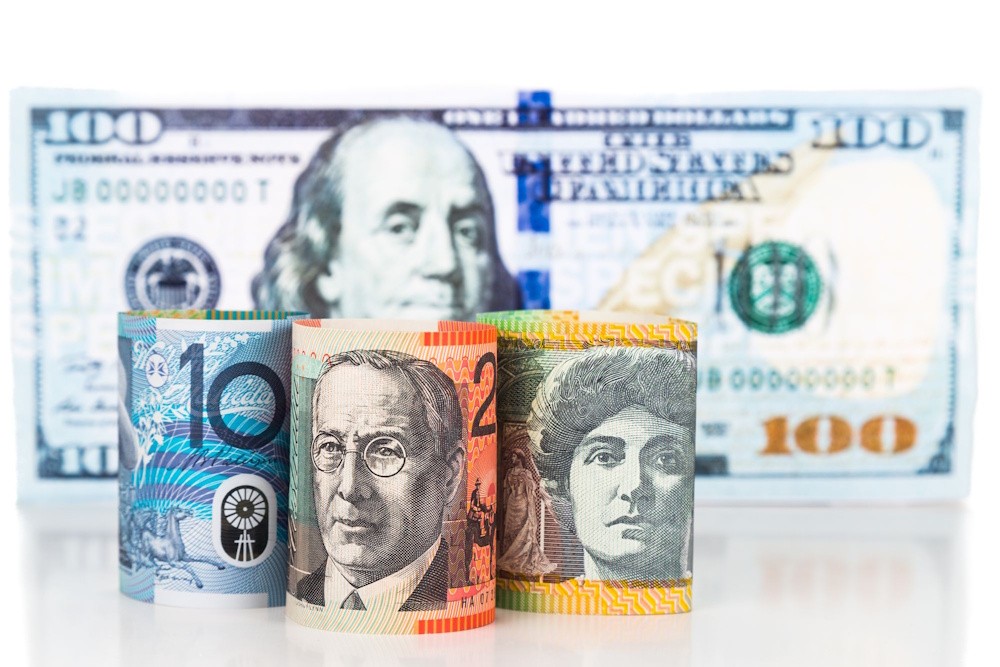
AUD/USD has rebounded above 0.6600, buoyed by a general decline in the US Dollar. Australia’s headline CPI is anticipated to rise to 4.8% year-on-year. Softer core inflation and weak employment present challenges for any additional tightening by the RBA. The Aussie Dollar registered modest gains against the Greenback on Tuesday, increasing approximately 0.20%, as the pair reclaimed the 0.6600 level amid US Dollar weakness following robust US data, in anticipation of the release of Australia’s Consumer Price Index. The AUD/USD exchange rate stands at 0.6638. Market sentiment deteriorated after a robust beginning to the week, influenced by NVIDIA’s gains. The US Dollar Index, which measures the buck’s performance against six currencies, is down 0.45% at 103.84, a tailwind for the AUD/USD pair.
Data in the US indicated a significant increase in Consumer Confidence for November, as reported by the Conference Board. Americans participated in the poll conducted from November 1 to 17, resulting in an increase of the index from 91.9 to 103.3, primarily driven by the backing of voters for Democrats or independent candidates. Trump’s tariffs have regained attention following the NVIDIA scandal. The US Treasury has enacted sanctions on subsidiaries of Chinese firms operating in Singapore. Concurrently, the Wall Street Journal has indicated that the US is poised to increase tariffs on China, the EU, and 14 additional nations. In Australia, the Consumer Price Index for October is anticipated to increase from 4.3% to 4.8% year-on-year, whereas the monthly figures are projected to decline from 0.8% to 0.6%. Core Trimmed Mean CPI is anticipated to decline from 3.6% to 3.5% year-over-year and to decrease from 0.3% to 0.2% month-over-month.
A concerning inflation report in Australia poses challenges for the Reserve Bank of Australia, which is grappling with consecutive disappointing employment figures, following three interest rate hikes this year to 4.85%. This could trigger a sharp economic deceleration for the country, as the unemployment rate has risen near 5%. Conversely, a more subdued reading would alleviate some of the concerns for the RBA in relation to the ongoing dilemma. In the daily chart, AUD/USD is positioned at approximately 0.6636, maintaining a bearish near-term outlook as the price remains significantly below the recent triple simple moving average cluster at around 0.6941. The pair also trades below a series of upward-sloping trend-line reference points between 0.6833 and 0.6897, in addition to the prior support trend-line starting at 0.6673, highlighting ongoing overhead supply.
The Relative Strength Index (14) at 25 remains in oversold territory, suggesting that while pressure is substantial, the downside may be susceptible to sporadic corrective rebounds rather than a straightforward trend reversal. On the topside, initial resistance is observed at the nearby upward trend-line starting around 0.6833 and 0.6865, with further barriers grouped near 0.6897 and the triple simple moving average around 0.6941. Above that zone, the 0.6673 trend-line start (now a higher resistance marker), the horizontal cap at 0.7198, and the long-term descending trend-line anchored near 0.8015 delineate increasingly formidable barriers. On the downside, the sole structural reference currently observable is the previous descending trend-line break level at 0.6334, which serves as a remote support floor while the price navigates within a bearish corridor between that level and the substantial resistance band above.